Karatbars confession in front of a district court in Germany

Impending Bankruptcy –

Karatbars Already in Crisis

The Karatbars story sparked a gold-digger atmosphere and hype among thousands of affiliates: allegedly own gold mines in Madagascar, a crypto token backed up by gold, a presumed own bank in Florida, CashGold, which was supposed to replace the global financial system, a smartphone that wants to rival the NSA in data security as well as ATMs from which one could theoretically draw the CashGold collector notes, if one could only find one nearby. It’s always about trust, the art of making others believe the perfect story. And if this threatens to break, because the perpetrators of these scams operate in the world of organized crime and will stop at nothing. The brutal and criminal Karatbars “managers” seem to employ every means to prevent the large-scale gold scam comes to light. But let’s start from the beginning.

The Anatomy of a Fraud

What made con men like Bernie Madoff and the – less talented – Karatbars crooks so successful? It is an ancient story – the story of trust, the basic need of a human being to believe in something that makes life meaningful and confirms our fundamental view of the world and ourselves. Scammers serve our secret longings, our belief in beautiful images and dreams. And we fall for them because they are a bit like Robin Hood.

In a way, scammers like Harald Seiz, Josip Heit, Alex Bodi, and Ovidiu Toma have an easy game. People believe what they want to believe. Their talent lies in finding out exactly what we want and then they present themselves as the perfect medium for fulfilling this wish. Impostors like Seiz, Heit & Co. are responding to this need, and the invented gold mine bonanza was their fairy tale. Fraud thrives in times of social and political upheaval, and old beliefs are then no longer sufficient. Nothing is more convenient to a conman than the sense of discomfort that stalks us as the world changes as we know it. Who knows if this business does not mean securing the future. The same patterns that were effective in the days of the Wild West still work today, only the platform has changed. It is always about trust and the confidence of another profit to beat.

Before a fraud can be committed, it always requires an emotional basis, then it needs logic and conviction and a pretense of real profit. By the time the situation gets hairy, we are usually so emotionally and economically involved that we ourselves do most of the work of persuasion. Sometimes we get even more involved when things go wrong, so when we’re completely ripped off, we do not even know what’s happened to us.

Most of the scams remain unrevealed because the truth would be simply embarrassing. In Karatbars’ case, neither of these factors are true. Despite all efforts to fix the precarious situation with ridiculous videos, the Karatbars scam remains just too obvious. There is already so much evidence that it is near to impossible to remedy the situation.

The video message of Josip Heit also shows how a scammer thinks and behaves. He attacks others, behaving arrogantly when questioning his person or the business. Reputable and serious businessmen do not mind if their business is being questioned. It is important for a scammer to end up victorious rather than a loser. The worst thing that can happen to a scammer is to lose face. Therefore, in the coming weeks we will certainly have to reckon with embarrassing performances by Harald Seiz and Josip Heit, but at the same time be able to analyze the fraud from a clear perspective. At least a decent dose of laughter and mockery will be provided by the Karatbars conmen, and it is almost certain that we will be amusingly entertained with Seiz’s and Heit’s statements. No expensive suit or luxury wristwatch can help restore credibility. The lies have been brought to light, and the truth has already spread around the world, but hey, at least it wasn’t the pinstripe suit of Seiz & Co. which brought them down.

So, How Is Life for the Karatbars Conmen at the Expense of the Ripped Karatbars Affiliates?

One question remains unanswered: why did Karatbars fail at leveraging the promised gold exchange (100 KBC tokens for 1g of gold) at the Gold Independence Day event in Las Vegas? By complying with the promise, they could have had their credibility cemented and further boosted the business. Was there not enough money to make this exchange happen? Was the money already spent on finance their luxurious private lifestyle? Where did all the millions of dollars remain? How does it live at the expense of ripped Karatbars affiliates?

One question remains unanswered: why did Karatbars fail at leveraging the promised gold exchange (100 KBC tokens for 1g of gold) at the Gold Independence Day event in Las Vegas? By complying with the promise, they could have had their credibility cemented and further boosted the business. Was there not enough money to make this exchange happen? Was the money already spent on finance their luxurious private lifestyle? Where did all the millions of dollars remain? How does it live at the expense of ripped Karatbars affiliates?

It is typical for fraudsters to spend the money acquired by criminal means for the purchase of status symbols, such as villas, cars, expensive watches or clothes, etc., which gives them the feeling of grandiosity. Ten million euros, which Harald Seiz has simply stolen for his personal luxury lifestyle, money that does not belong to him, not to mention the fact that the funds come from an illegal investment scheme.

Attention, Mafia!

Sadly, such attacks are common to the mafia structures behind Karatbars. The Romanian mafia boss from Sibiu in Romania, Adrian Tâmplaru, is the Godfather of Alex Bodi. He was involved in a stabbing in a Romanian club and was detained for illegally carrying weapons. Even local mafia attacks between Templaru and a certain Mircea Ursu from Bucharest ended in armed attacks and are known to the police.

Alex Bodi with his Romanian Godfather Adrian Tâmplaru

Josip Heit and Alex Bodi

Romanian mafia boss Adrian Tâmplaru at the Formula 1 Grand Prix in Abu Dhabi

When did the decline of Karatbars actually start? The Eastern European mafia structures around Josip Heit and Alexandru-Nicolae Bodi (Alex Bodi) certainly played a key role in the fraud scheme. One might almost be inclined to think that Harald Seiz is helpless at the mercy of this senior Mafiosi. Alexandru-Nicolae Bodi aka Alex Bodi is the God Son of the feared Mafiosi Adrian Tâmplaru from the Romanian Sibiu. According to Romanian press reports, Adrian Tâmplaru also sat several years behind bars. There are also rumors circulating against Josip Heit that he is a former felon and spent a few years in jail.

Above: Romanian mafia boss Adrian Tâmplaru at his restaurant “Sibiu GrillHaus” in Offenbach am Main, Germany

First Court Rulings Against Karatbars International GmbH From Stuttgart

The noose is slowly tightening around the neck of Seiz, Heit & Co. In the meantime, there were the first court rulings in favor of damaged partners, the former consultant Dirk Zahlmann under the file number AZ 3 O 33-19 of the district court in Wiesbaden, Germany, and a marketing company from Mainz, Germany. In both cases, Karatbars International GmbH tried to shift the blame to the plaintiffs. In the case of Zahlmann versus Karatbars, the latter attempted to outlaw the plaintiff by alleging theft. The district court in Wiesbaden rejected the allegations of the defendants and sentenced Karatbars to pay EUR300,000 to the former consultant Zahlmann. Unsubstantiated accusations and fictitious statements have just bad prospects of success in courts. Karatbars cannot trick the judiciary with their scam, that is for sure.

The luxurious lifestyle of the Karatbars conmen at the expense of their Affiliates.

A lifestyle that doesn’t speak bankruptcy.

According to a press release published on August 15, 2019 on https://www.landespressedienst.de/landgericht-mainz-olg-koblenz-entscheiden-zu-gunsten-der-steinberg-marketing-gmbh/, Karatbars tried to obtain an injunction in front of a German court under the file number Landgericht Mainz 10 HK O 4/19 against Steinberg Marketing GmbH, demanding various information claims, accounting claims and also the transfer of KBCs.

The same source further states: The court found the application to be unsubstantiated and doomed to failure. The court denied all requirements for the issuance of an interim injunction pursuant to §§ 935, 940, 917f ZPO. In addition, the court denied a so-called “ground for injunction”. The remarks on p. 4 f. of the court order are remarkable and absolutely groundbreaking, in which clear reference is made to the insolvency risk of the aforementioned applicant and the danger that the opponents would have made uncovered promises intended to exchange gold. Besides, the resolution states: “To the extent that the applicant refers to the fact that a risk of insolvency threatens him because he had promised customers to exchange 100 units of the crypto currency KBC sold to the customer for one gram of gold on July 4, 2019, this does not constitute an “emergency” as defined in § 940 ZPO… In expectation of high profits, the applicant promised to exchange digital crypto currency (KBC) for gold to clients without having an overview of the income from its sale… The financing model ICO, which the defendant has agreed with the applicant, is a speculative transaction with the crypto currency KBC, which is intended to generate high profits for the applicant. If the applicant is threatened with insolvency because she has made “uncovered promises” to customers within the framework of the ICO initiated by her regarding the exchange of 100 units of the crypto currency KBC into gold, this shall not be considered an emergency as defined in § 940 ZPO. Total losses and the resulting insolvency risks are part of the business model of an ICO system…”. The fact that the court speaks of “uncovered promises” and an “insolvency risk” on the part of the other party in such clarity is remarkable and very rare.

Despite the well-founded decision, the opposite side forced an oral hearing before the Mainz Regional Court and even extended its applications there — against the indications of the court. She also failed in this respect “cracking” and to the full extent by rejecting the application. Subsequently, she sought the sole remedy of an appeal to the Koblenz Higher Regional Court as the competent appellate court. The aforementioned “Karat Gold Cooperation…” under file number 6 W 189/19 also failed there because of the legally binding and final decision of 03.07.2019, because the Senate in Koblenz is the court with the highest ranking and the highest decision. The Senate of the Koblenz Higher Regional Court stated and explained in detail that the “immediate appeal” was unfounded. No claims existed, in particular no claims to surrender.”

However, it is interesting that Karatbars had only made losses since their founding in 2011. Only in the 2014 financial year, after a disastrous year in 2013 (net loss of EUR 1,151,393.68 and liabilities of EUR 985,566.91), the German LLC was able to generate net income for the year 2014 of EUR 1,288,649.25. The following year Harald Seiz got a company loan amounting to Euro 508,809.26. For the following years – from 2016 to 2018 – all of a sudden no financial reports have been filed until today. Instead, on May 14, 2019, an existing company called Firststep 24 GmbH from the German city of Leipzig was bought up and renamed into “Karatbars Karatbars Gold GmbH” under the commercial register No. HRB 769390. What no one noticed so far is that Karatbars is now actually a completely new company with a similar name, same CEO, and the same business address in Stuttgart in Germany, Vaihinger Street 149A. Therefore, the most important question here is where all the paid-up money from the Affiliates went to. Certainly not to the German tax authorities but rather straight into the pockets of Seiz, Heit, and their fellow conmen and scam enablers.

Buy it, strip it, flip it – that seems to be the obvious motto of Harald Seiz, Josip Heit, and his Mafia mates. The main thing is, the lifestyle is right.

Karatbars in der Krise – Drohende Insolvenz – Karatbars-Geständnis vor dem Landgericht Mainz

Karatbars-Geständnis vor dem Landgericht Mainz

Drohende Insolvenz –

Karatbars in der Krise

Die Karatbars-Story sorgte für Goldgräberstimmung und Hype bei Tausenden von Affiliates: Eigene Goldminen auf Madagaskar, ein Krypto-Token der gegen Gold abgesichert ist, eigene Bank in Florida, CashGold, welches das globale Finanzsystem ersetzen sollte, ein Smartphone, welches selbst der NSA glatt Konkurrenz machen könnte sowie Automaten, an denen man theoretisch Sammlergoldscheine beziehen könnte, wenn man eins in der Nähe nur finden könnte. Immer geht es um Vertrauen, um die Kunst, andere etwas glauben zu lassen, um die perfekte Story. Und wenn diese zu zerbrechen droht, schrecken Verbrecher vor nichts zurück. Den brutalen und kriminellen Karatbars-”Managern” ist offenbar jedes Mittel recht, den großaufgelegten Goldbetrug nicht ans Licht kommen zu lassen. Aber fangen wir von vorne an.

Die Anatomie eines Betrugs

Was macht Gauner wie Bernie Madoff und die – weniger talentierte – Betrüger-Gang von Karatbars so erfolgreich? Es ist eine uralte Geschichte, die Geschichte vom Glauben, vom elementaren Bedürfnis des Menschen, an etwas zu glauben, was dem Leben Sinn verleiht, was unsere Sicht auf uns selbst und die Welt bestätigt. Betrüger bedienen unsere geheimen Sehnsüchte, unseren Glauben an schöne Bilder und Träume. Und wir verfallen ihnen, weil sie ein wenig wie Robin Hood sind.

In gewisser Hinsicht haben es Betrüger wie Harald Seiz, Josip Heit, Alex Bodi und Ovidiu Toma leicht. Die Leute glauben, was sie glauben wollen. Ihre Begabung liegt darin, herauszufinden, was genau wir wollen und sich selbst als perfektes Medium zur Erfüllung dieses Wunsches zu präsentieren. Hochstapler wie Seiz, Heit & Co. kommen diesem Bedürfnis entgegen, und die erfundene Goldbonanza-Geschichte war ihre große Stärke. Betrug floriert in Zeiten des Umbruchs, wenn sich Neues ereignet und alte Anschauungen nicht mehr ausreichen. Nichts kommt dem Betrüger gelegener als das Gefühl des Unbehagens, das uns beschleicht, wenn sich die Welt, wie wir sie kennen, gerade verändert. Wer weiß schon, ob dieses Geschäft nicht die Absicherung gegen die Zukunft bedeutet. Die gleichen Muster, die in den Zeiten des Wilden Westens wirksam waren, funktionieren auch heute noch, lediglich die Plattform hat sich verändert. Es geht immer um Vertrauen und aus dem Vertrauen eines anderen Profit zu schlagen.


Bevor ein Betrug in Gang gesetzt werden kann, bedarf es immer einer emotionaler Basis, danach geht es in Richtung Logik und Überzeugung und der Vorspiegelung realen Gewinns. Bis die Sache brenzlig wird, sind wir meist emotional und wirtschaftlich bereits so involviert, dass wir selbst den größten Teil der Überzeugungsarbeit leisten. Wir engagieren uns manchmal sogar dann noch mehr, wenn die Sache bereits schiefgeht, so dass wir, wenn man uns komplett abgezockt hat, nicht einmal so recht wissen, was uns zugestoßen ist.

Die meisten Betrugsgeschichten bleiben unaufgedeckt oder gelangen nicht an die Öffentlichkeit, weil es peinlich wäre. Bei Karatbars trifft beides nicht zu. Trotz aller Bemühungen, mit lächerlichen Videos die Lage schönreden zu wollen, bleibt der Karatbars-Scam offensichtlich. Es gibt inzwischen schon so viele Beweise, dass es schlichtweg unmöglich ist, sich aus der Situation herauszureden.

Auch die Videobotschaft von Josip Heit zeigt, wie ein Betrüger denkt und sich verhält. Er greift andere an, verhält sich arrogant, wenn man seine Person oder das Geschäft hinterfragt. Seriöse Geschäftspartner haben nichts dagegen, wenn ihr Angebot hinterfragt wird. Einem Betrüger ist es wichtig, am Ende als Sieger und nicht als Verlierer dazustehen. Das Schlimmste, was ihm passieren kann, ist sein Gesicht zu verlieren. Daher werden wir auch in den nächsten Wochen sicherlich mit peinlichen Auftritten von Harald Seiz und Josip Heit rechnen müssen, gleichzeitig jedoch auch in der Lage sein, mit klarer Sicht den Beschiss selbst analysieren zu können. Wenigstens für eine ordentliche Dosis Gelächter und Spott sorgt die Karatbar-Gang, und es ist fast irrwitzig zuzusehen, wie sich Seiz und Heit selbst vorführen. Da hilft auch kein teurer Anzug oder eine Luxus-Armbanduhr mehr, um Glaubwürdigkeit wiederherzustellen. Die Lügen sind aufgeflogen, der Scam hat sich bereits weltweit herumgesprochen, aber ein Trost gibt es allemal für Seiz & Co., denn zumindest hat es nicht am Anzug gelegen.

Wie lebt es sich auf den Kosten der abgezockten Karatbars-Affiliates?

Eine Frage bleibt jedoch offen: warum hat sich Karatbars die Möglichkeit, mit dem angesagten Goldumtausch (100 KBC Token für 1 g Gold) auf dem Gold Independence Day Event, so fatal verbaut? Mit der Einhaltung des Versprechens hätten sie immerhin Glaubwürdigkeit weiter zementieren und das Geschäft weiter ankurbeln können. Gab es denn nicht genug Geld, um diesen Austausch zu vollziehen und den Betrug somit weiterlaufen zu lassen? War das Geld alle und wo verblieben denn die dreistelligen Millionenbeträge? Wie lebt es sich auf den Kosten der abgezockten Karatbars-Affiliates?

Abgesehen von teuren Anzügen, exotischen Reisen, exklusiven Champagner-Parties, Uhren, opulenten Gehältern und Luxuskarossen musste für den Karatbars International GmbH Geschäftsführer mit dem ergaunerten Geld eine 790 Quadratmeter große Zehn-Millionen-Euro-Villa in Sindelfingen in der Nähe von Stuttgart her. Nach einer Auflistung der Immobilienvermittlung Engel & Völkers aus dem vergangenen Jahr zählt die Luxusvilla wohl zu den fünf teuersten, die zurzeit in Deutschland auf dem Markt sind. So liest sich die Immobilienbeschreibung im Netz: “Die Villa Hollywood steht eingebettet in einen Hang mit weitreichendem Talpanorama. Im obere Geschoß liegt die Hauptwohnung der Villa. Ihre teilüberdachte Terrasse verfügt über eine Außenküche mit großem Essplatz und findet ihren Abschluss in einem Wasserbecken mit infinity edge. Auf der darunterliegenden Gartenebene befindet sich der Spabereich. Dieser umfasst eine Sauna, ein Wellnessbad, ein Sonnendeck mit Außendusche und überdachtem Whirlpool, dessen Abdeckung motorisch angetrieben wird. Von der Terrasse des oberen Geschosses führt eine große Außentreppe in die Gartenanlage (…) Schlafzimmer ragt als „schwebender“ Raum über das Whirlpool-Deck hinaus und ermöglicht zu jeder Jahreszeit den Blick auf die untergehende Sonne am Horizont. Gestaltgebende Fassadenteile außen und Möbeleinbauten im Innenbereich agieren als Zonierung.Bekleidungen im Außenbereich aus Alucubond, Trespa und hinterlackierten Glaspaneelen homogenisieren die unterschiedlichen, dahinter verborgenen Funktionen. Zwischen dem Koch- und Essbereich lenkt ein Lichthof zusätzliches Sonnenlicht in den Wohnraum und stärkt den Bezug nach außen. Das offene Raumkonzept wird durch raumbildende Elemente gegliedert und die natürliche Wegeführung wird durch deren Schrägen subtil unterstützt (…)Ein schwenkbarer Flatscreen, der unter einer Klappe im Parkett verborgen ist, fährt auf Knopfdruck heraus. Abgehängte Decken und Wandverkleidungen nehmen Stauräume, Durchgänge sowie notwendige elektronische und haustechnische Komponenten auf und wirken als einheitliche Oberfläche. Durch raumhohe Glas- und Spiegelflächen im Eingangsbereich der Hauptwohnung entsteht ein fließender Übergang von innen nach außen (…).”

Typisch für Betrüger ist, das unlauter erworbene Geld für den Kauf von Statussymbolen, wie Villen, Autos, teure Uhren oder Kleidung usw. auszugeben, was ihnen das Gefühl der Grandiosität gibt. Zehn Millionen Euro, die Harald Seiz mal schlichtweg für seinen persönlichen Luxus-Lifestyle entwendet hat, Geld, welches ihm nicht gehört, ganz zu schweigen von der Tatsache, dass die Gelder aus illegalem Investmentsystem stammen.

Achtung, Mafia!

Solche Angriffe sind für die mafiosen Strukturen hinter Karatbars üblich. Der rumänische Mafiaboss aus Sibiu, Adrian Tâmplaru, ist Ziehvater von Alex Bodi. Er war in eine Messerstecherei in einem rumänischen Club verwickelt und wegen illegalem Führen von Waffen inhaftiert. Auch lokale Mafiafehden zwischen Templaru und einem gewissen Mircea Ursu aus Bucharest endeten in bewaffneten Übergriffen und sind polizeibekannt.

Alex Bodi mit seinem Ziehvater Adrian Tâmplaru

Josip Heit und Alex Bodi

Rumänischer Mafiaboss Adrian Tâmplaru beim Formel 1 Grand Prix in Abu Dhabi

Wann ging es eigentlich mit dem Niedergang von Karatbars los? Die osteuropäischen Mafiastrukturen um Josip Heit und Alexandru-Nicolae Bodi (Alex Bodi) haben sicherlich den Betrugsschema maßgebend mitbestimmt. Man könnte fast dazu neigen zu denken, dass Harald Seiz diesen ranghohen Mafiosi hilflos ausgeliefert ist. Alexandru-Nicolae Bodi aka Alex Bodi ist der Ziehsohn des befürchteten Mafiosi Adrian Tâmplaru aus dem rumänischen Sibiu. Rumänischen Presseberichten zufolge saß Adrian Tâmplaru auch mehrere Jahre hintern Gittern. Auch gegen Josip Heit kursieren Gerüchte, dass er ein ehemaliger Gewaltverbrecher ist und ein paar Jahre im Knast verbrachte.

Oben: Rumänischer Mafiaboss AdrianTâmplaru mit seinem Restaurant in Offenbach am Main, Hermannstadt GrillHaus

Erste Gerichtsurteile gegen die Karatbars International GmbH aus Stuttgart

Die Schlinge zieht sich langsam enger um den Hals von Seiz, Heit & Co. zu. In der Zwischenzeit gab es die ersten Gerichtsurteile zugunsten der geschädigten Partner, des ehemaligen Beraters Dirk Zahlmann unter dem AZ 3 O 33-19 des Landgerichts Wiesbaden, sowie einer Marketingfirma aus Mainz. In beiden Fällen versuchte die Karatbars International GmbH, die Schuld auf die Kläger abzuwälzen. Im Fall Zahlmann versus Karatbars, versuchte diese den Kläger durch den Vorwurf des Diebstahls auszustechen. Das LG Wiesbaden wies die Vorwürfe der Angeklagten zurück und verurteilte Karatbars zur Zahlung von 300.000 Euro an den ehemaligen Consultant Zahlmann. Haltlose Vorwürfe und frei erfundene Statements haben bei Gerichten eben schlechte Aussichten auf Erfolg. Spätestens bei der Justiz ist es aus mit dem Spiel, das hat Karatbars bereits begreifen müssen.

Die Schlinge zieht sich langsam enger um den Hals von Seiz, Heit & Co. zu. In der Zwischenzeit gab es die ersten Gerichtsurteile zugunsten der geschädigten Partner, des ehemaligen Beraters Dirk Zahlmann unter dem AZ 3 O 33-19 des Landgerichts Wiesbaden, sowie einer Marketingfirma aus Mainz. In beiden Fällen versuchte die Karatbars International GmbH, die Schuld auf die Kläger abzuwälzen. Im Fall Zahlmann versus Karatbars, versuchte diese den Kläger durch den Vorwurf des Diebstahls auszustechen. Das LG Wiesbaden wies die Vorwürfe der Angeklagten zurück und verurteilte Karatbars zur Zahlung von 300.000 Euro an den ehemaligen Consultant Zahlmann. Haltlose Vorwürfe und frei erfundene Statements haben bei Gerichten eben schlechte Aussichten auf Erfolg. Spätestens bei der Justiz ist es aus mit dem Spiel, das hat Karatbars bereits begreifen müssen.

Luxuriöser Lebensstil der Kartabars-Srippenzieher auf Kosten seiner Affiliates. Ein Lifestyle, der wenig von drohender Insolvenz zeugt.

Laut einer Pressemitteilung vom 15. August 2019 auf https://www.landespressedienst.de/landgericht-mainz-olg-koblenz-entscheiden-zu-gunsten-der-steinberg-marketing-gmbh/ versuchte Karatbars unter dem Aktenzeichen Landgericht Mainz 10 HK O 4/19 eine einstweilige Verfügung gegen die Steinberg Marketing GmbH zu erwirken, wobei sie diverse Auskunftsansprüche, Rechnungslegungsansprüche und auch die Übertragung von KBCs forderte.

Ferner heißt es: „Das Gericht hielt den Antrag für substanzlos. Es verneinte sämtliche Voraussetzungen für den Erlass einer einstweiligen Verfügung gem. §§ 935, 940, 917f ZPO. Es lehnte auch einen sogenannten „Verfügungsgrund“ ab. Bemerkenswert und wegweisend sind die Ausführungen (Seite. 4 f.) des gerichtlichen Beschlusses, worin in deutlichen Worten das Insolvenzrisiko der genannten Antragsstellerin in Bezug genommen und auch die Gefahr betont wird, dass die Antragstellerin „ungedeckte Versprechungen“, gerichtet auf einen Umtausch in Gold getätigt hätten. In dem Beschluss heißt es unter anderem: „Soweit die Antragstellerin darauf verweist, dass ihr ein Insolvenzrisiko drohe, weil sie Kunden versprochen habe, zum 4. Juli 2019 je 100 Einheiten der an den Kunden verkauften Kryptowährung KBC in ein Gramm Gold umzutauschen, stellt dies keine „Notlage“ im Sinne des § 940 ZPO dar… Die Antragstellerin hat in Erwartung hoher Gewinne ihren Kunden den Umtausch digitaler Kryptowährung (KBC) in Gold versprochen, ohne einen Überblick über die Einnahmen aus deren Verkauf zu haben. Bemerkenswert und sehr selten ist, dass das Gericht in dieser Klarheit von „ungedeckten Versprechungen“ und einem „Insolvenzrisiko“ der Gegenseite dezidiert spricht.

Die Antragstellerin legte daraufhin Beschwerde beim Oberlandesgericht Koblenz, dem zuständigen Rechtsmittelgericht ein. Auch dort scheiterte die Antragstellerin (Aktenzeichen 6 W 189/19) durch den Beschluss vom 03.07.2019 rechtskräftig und abschließend. Der Senat des Oberlandesgerichts Koblenz hat festgestellt und eingehend begründet, dass die „sofortige Beschwerde“ unbegründet sei. Es bestünden keinerlei Ansprüche, insbesondere keinerlei Herausgabeansprüche. Somit hat die Steinberg Marketing GmbH mit der rechtskräftigen Entscheidung einen bedeutsamen Erfolg mit den begründeten Entscheidungen erzielt, der im Sinne der BaFin-Warnungen dem Anlegerschutz entspricht. Sämtliche Vorwürfe gegen die Steinberg Marketing GmbH, haben sich als vollumfänglich substanzlos und in jeder Hinsicht als unzutreffend erwiesen, was nach sorgfältiger Untersuchung durch die Justizbehörden überprüft wurde.“

Interessant ist allerdings, dass Karatbars seit der Eintragung ins Handelsregister 2011 lediglich Verluste eingefahren hatte. Nur im Geschäftsjahr 2014, nach einem desaströsen Jahr 2013 (Jahresfehlbetrag 1.151.393,68 Euro und Verbindlichkeiten über 985.566,91 Euro), konnte die GmbH einen Jahresüberschuss von 1.288.649,25 Euro erwirtschaften. Im folgenden Jahr hat sich Harald Seiz dann ein Darlehen i.H.v. insgesamt Euro 508.809,26 auszahlen lassen. Für die fortfolgenden Jahre von 2016 bis 2018 wurden auf einmal keine Bilanzen mehr hinterlegt. Stattdessen wurde am 14.05.2019 eine bestehende Firma namens Firststep 24 GmbH aus Leipzig aufgekauft und in „Karatbars Karatbars Gold GmbH“ unter der HRB 769390 umgetauft. Wohlgemerkt, neue GmbH, ähnlicher Name (statt „Karatbars International“ nun „Karatbars Gold“), gleicher Geschäftsführer, dieselbe Geschäftsanschrift in Stuttgart, Vaihinger Straße 149A. So lässt man problematische Firmen praktisch verschwinden und durch die Namensähnlichkeit hofft man, dass es keiner merkt. Die Frage hier ist also wo die eingezahlten Affiliates-Gelder verblieben sind? Sicherlich vorbei am deutschen Fiskus und direkt in die Taschen von Seiz, Heit und Co., denn eine exklusive Villa schägt mit 10 Millionen Euro zu Buche und der Sommerurlaub auf Capri an Bord einer Superyacht kostet schon mal das eine oder andere. Leidtragende sind vor allem die Affiliates.

Kaufen, plündern, unterschlagen, wegwerfen – das scheint ganz offensichtliches Motto von Harald Seiz, Josip Heit und seinen Mafia-Gehilfen zu sein. hauptsache, der Lifestyle stimmt.

Event Disaster: The Gold Independence Day Turns out to Be a Total Flop – KBC Coin Now in Freefall (Part3)

It was coined as the biggest and most glamorous event of the year: the highly promoted “Gold Independence Day” event in Las Vegas on July 4, 2019. In the end, it turned out to be a complete and absolute disaster. Coordinated by the fraudulent duo, Harald Seiz and Josip Heit, the corrupt team behind Karatbars, Gold Standard Banking, White Rock and the worthless KBC and KCB coins, the event and thus the whole “KB Universe” turns out to be a big scam. You know, the same types referred to as Ponzi or pyramid schemes apply here.

Recalling the bold promise of the rogue Mr. Seiz, the coin would be valued at $0.40 as of July 4, 2019, or 100 coins worth one gram of gold. Be sure to watch Seiz’s “personal guarantee” to be able to exchange 100 KBC for one gram of gold on July 4, 2019 (see here> (https://youtu.be/B_eZckZMW-o). Thousands of innocent people invested a few hundred or even a thousand dollars in the coin, because admittedly when you hear all this, you think that nothing can go wrong – quite the contrary, everything that could go wrong went wrong.

A day earlier, on July 3, 2019, many well-believing Karatbars affiliates campaigned for the event (https://youtu.be/Am9KD4ribNE). The hype sent the KBC Coin up to $ 0.11 before crashing to $ 0.07 on July 4, 2019, and to just $ 0.05 on July 7. Where a hype is, the scam is not far behind.

Frenetically, the exchange of 100 KBC coins for one gram of physical gold was advertised, for weeks, even months. And then came the 4th of July, the day on which all investors shamelessly duped, were sold for stupid. Suddenly everyone looked old. There was no gold nor did the KBC Coin generate the guaranteed 40x return. When the cat was let out of the bag, the promised exchange of 100 KBC to one gram of gold turned out to be worth less than the bag. The would-be entrepreneur Seiz and his companion Josip Heit, who had no less ambitions to revolutionize the financial world, had in the several months before event day, “forgot” to note that the coin exchange rate is limited and each can only receive one gram of cash gold per day. With 10,000 coins, it would take you 100 days to exchange them into 100 cash gold bars of one gram each. Whoops, a big thing to forget, don’t you think guys?

Instead, the event participants were given the “Gold Savings Plan” (from 5:00> https://youtu.be/aST5h965geM), a savings plan for a “better tomorrow” and “for children”. On the Karatbit Exchange, KaratGold coins could be exchanged for a cryptocurrency called ‘Bonus Univals’, or BUNV for short. For 100 KBC coins, investors would receive 10 BUNV, which equals one gram of CashGold. The Vault Savings Plan, divided into five categories, plans to provide 4% BUNV on 100 saved BUNV, at its lowest denomination. In practical terms, this means that one would need 1,000 KBC to get to the usable 100 BUNV, otherwise you leave empty. The big event promise to exchange 100 KBC in one gram of physical gold was just cheap talk, an utter scam no likes of those of Bernie Madoff. The BUNVs can, as explained above, either be saved or theoretically pay out. The KBC white paper states on page seven, “With the KaratGold Coin and the KaratGold Ecosystem, everybody can pay for goods and services anywhere and anytime.” Mind you, only theoretically, because the practical application of CashGold does not exist. At about 70,000 Karatbars networkers, known as “Affiliates”, no one has yet to managed to pay with CashGold for a car let alone a pack of gum in the supermarket. The Karatbars Proof of Concept actually fails before it starts because of this simple practical feasibility. Remember the laws of supply and demand, the price of an item is only worth what someone else will pay for it. Since these CashGold metrics aren’t accepted for a stick of gum, the value of nothing is nothing.

Any Karatbars affiliate wishing to convert the KBC to USD on an exchange will only get $0.064882 today (July 8, 2019), one year after the non-existent bank was promoted in Florida. For comparison, the KBC price for the ICO launch in February 2018 was $0.05. As of July 7, 2019, it was only $0.05; The KBC Coin has experienced no increase in value in more than a year and a half after the ICO. Investors expect to make a profit when the currency later rises in price after an ICO and then their shares are worth more than at the time of purchase. However, this is clearly not the case with Karatbars.

But why the whole staged event? Instead of investing in KBC Coins, why not buy CashGold right away? By going this route, one would not have to follow the cumbersome direction to change the KBC Coin in BUNV on the Karatbit Exchange, which still does not achieve any physical cash gold. Not to mention that you cannot pay with the CashGold notes in practice. Even if there were acceptance points, why pay with a coin that guarantees a supposed annual increase in value? Even from this purely financial-economic point of view, the whole Karatbars concept makes no sense.

Anyone who believes that CashGold is recognized as a global payment system also believes in the nonexistent gold mines in Madagascar. (We previously reported> https://investreport.home.blog/the-case-of-karatbars-the-biggest-gold-pyrmid-scheme-of-all-times/

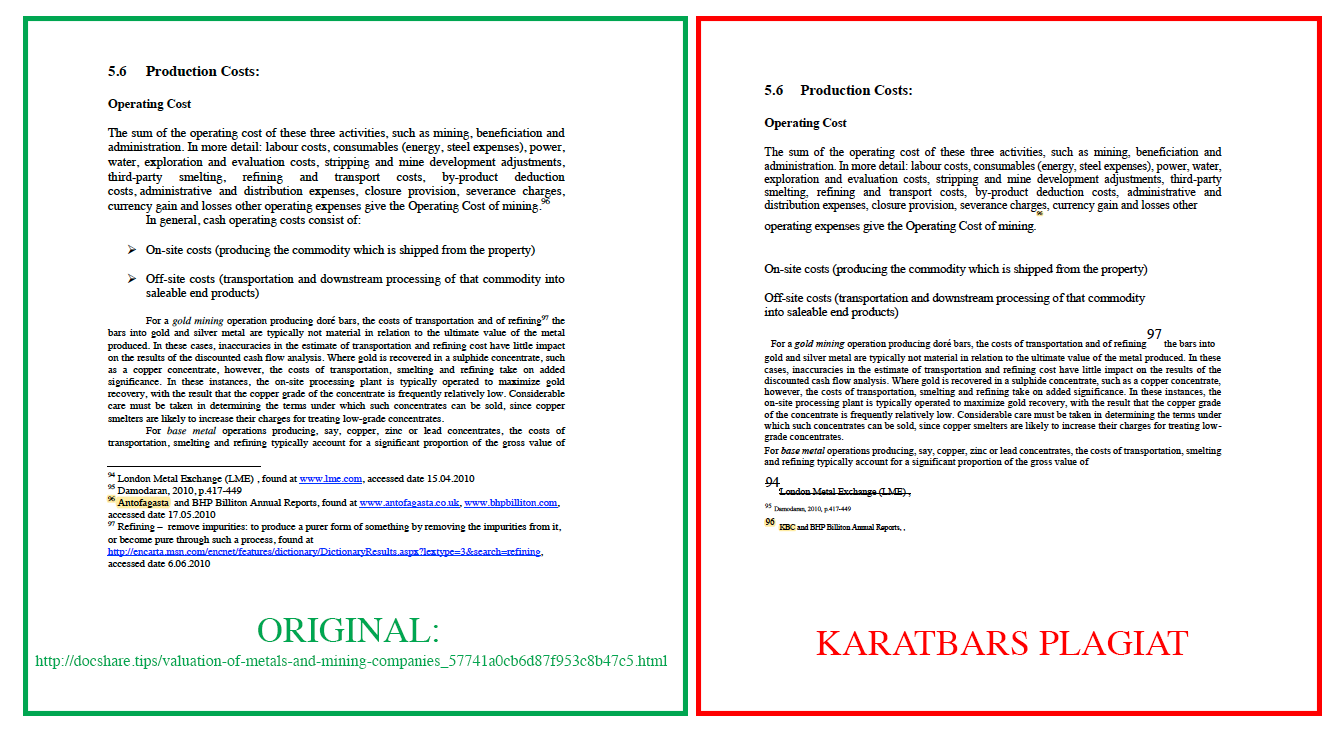
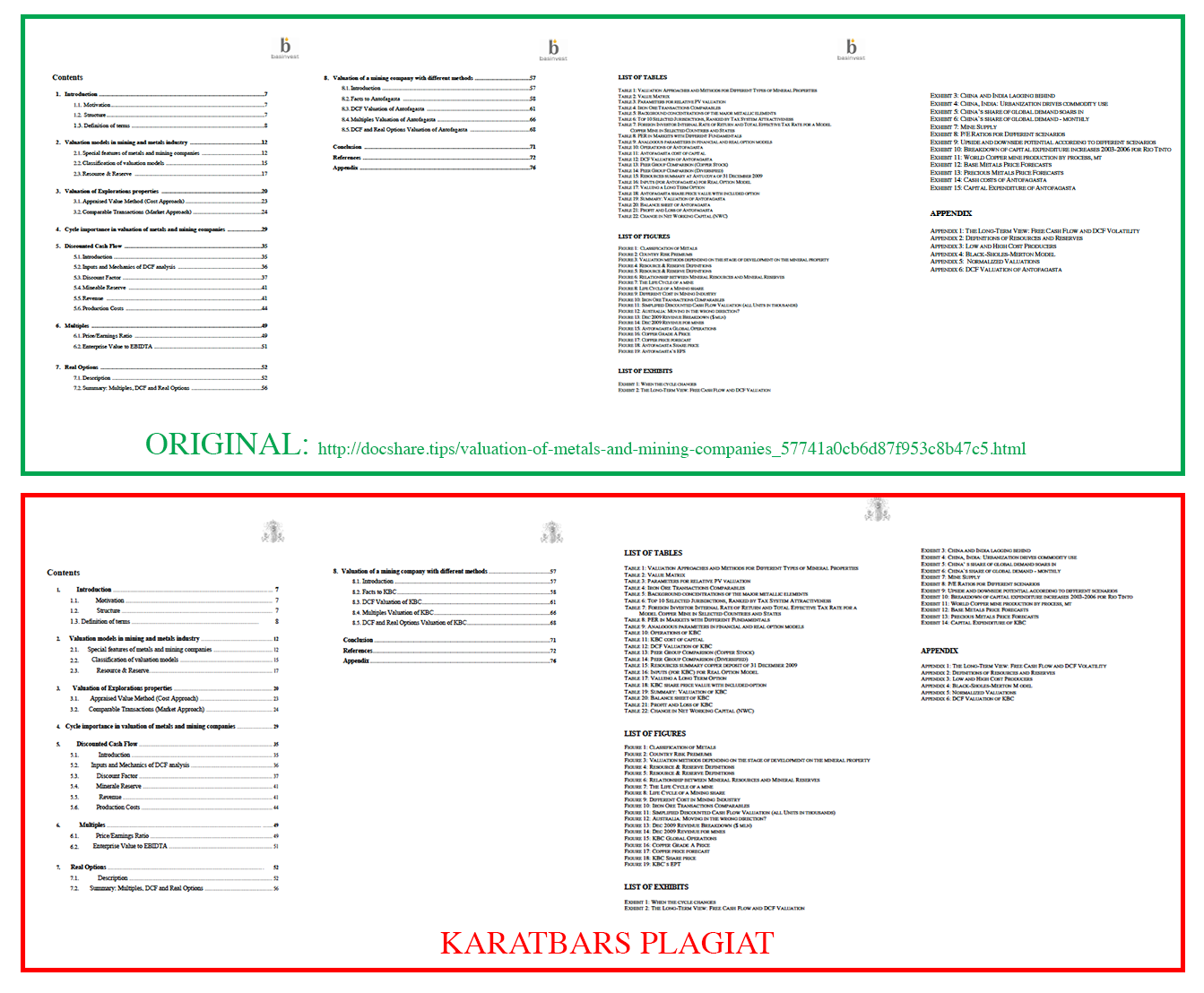
The Karatbars fraud system is laid out in such a way to confuse Affiliates, but not inscrutable for professionals. Seiz falsifies his mines to his heart’s content and unabashed – and nobody checks. Until the mine assessment report turns out to be a total copy (As we previously reported> https://investreport.home.blog/2019/06/28/karatbars-scam- fraud warning /). There is no gold producing mine anywhere in the world or a licensed KaratCoin bank in Florida. The KBC and KCB Coin are worth nothing and valued at nothing more than Mr. Seiz and Mr. Heit’s imagination.

Today, after the KBC crash and the complete loss of image, reputation and shameless deception of the Gold Independence Day, the crash of the gold rush system is unstoppable. The tax fraud consequence is huge as any financial dummy would know. But this consequence in full is not yet known. We will leave this to the US and German authorities for further scrutiny. As far as adverse publicity, this opens a wide field that is just beginning to bloom. Harald Seiz, Josip Heit, Alex Bodi, Ovidiu Toma, and Co. can still run with the illegal investigation for a long time. With foreign people to inflate legal tender quickly, that’s not very difficult. What sounds like a coup from a Hollywood comic strip is just a sophisticated fraud system that artificially boosts the value of actually worthless KBC and KCB coins. Seiz and Heit, who like to think of themselves as enfant terrible in the traditional financial world, as provocateurs who want to turn global finance upside down, are nothing more than greedy cheaters who approve of public luxury at the expense of others. The KBC will never replace any countries currency just simply because governments never let themselves to spend these types of currencies. Monetary policy lies in the power of federal governments. You would think that Dr. hon. Harald Seiz would know this.

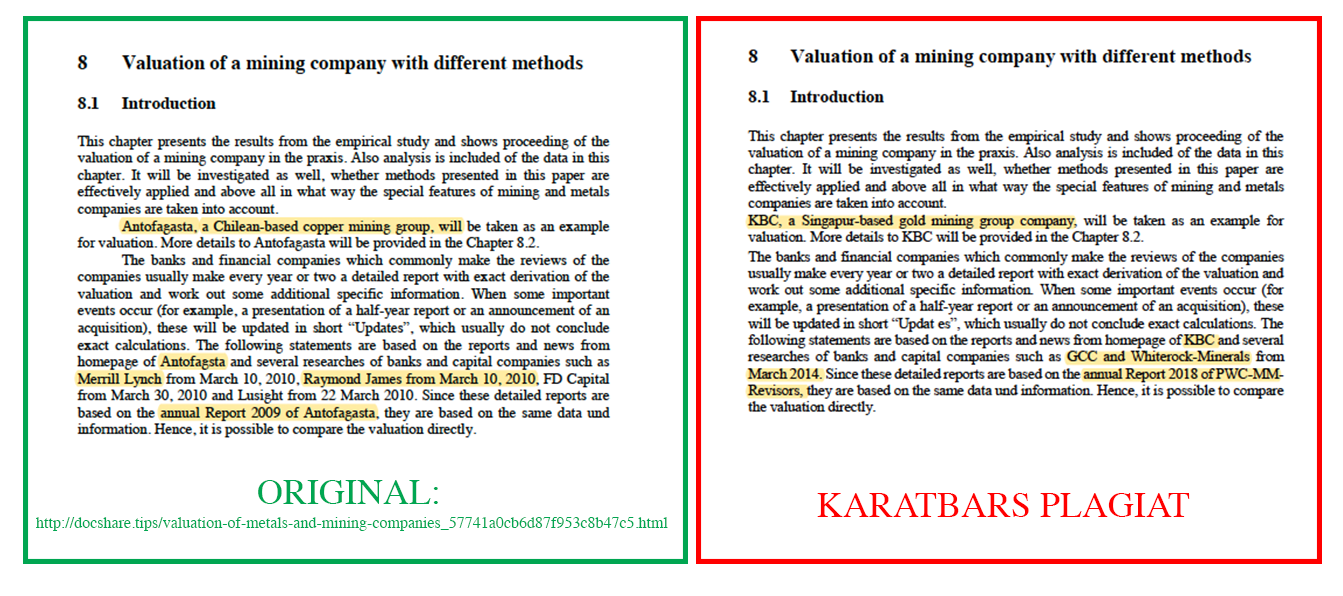
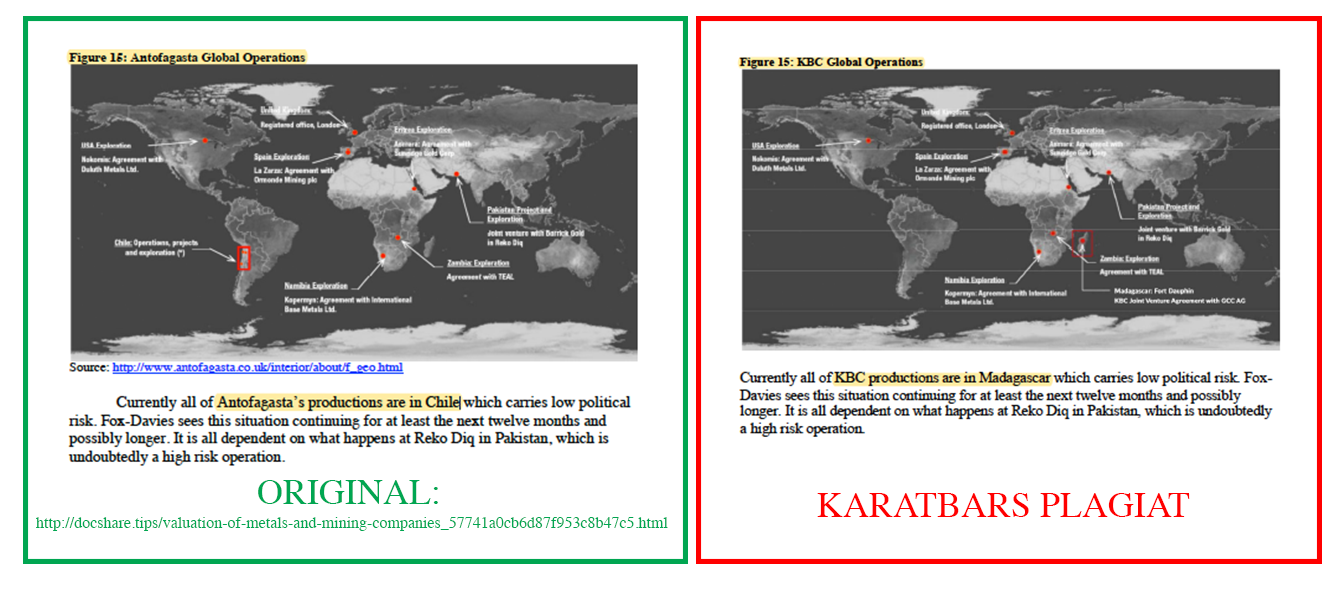
The primary value of a blockchain is the trustless exchange of values. The KBC or KCB Coin is a long way from this principle. The SEC has neither verified the existence and ownership of the alleged gold mines nor audited their production and value. The auditor of the valuation papers is a simple accountant, who has plagiarized from the publication of Mrs. Svetlana Baurens blatantly 1: 1 and declared the mines, which belong to a Chilean company, as Karatbars mines. Everything is used to pay off investors’ money. Therefore, we can only advise anyone to contact their respective regulatory authority in their country: the SEC in the US, the CSA in Canada, the Financial Sector Conduct Authority in South Africa, FI in Sweden, BaFin in Germany, etc. in Liaison with the respective Criminal Police Office. Josip Heit, Chairman of Karatbars, as well as the CEO of Gold Standard Banking Corporation AG, missed every trace despite announcing the most important event of the year.

There was a video message from Heit published on YouTube four days after the disaster event (https://www.youtube.com/watch?v=i2NthOykI_8). In a ridiculous attempt to stage the video message in press style, Heit spoke into the microphone in a broken and incomprehensible English … except that the microphone was not plugged in at all. To decorate the video image a little more, put a video camera from about 30 cm proximity to the table, although from this distance could only pick up the pinstripe and the inserted white cloth on Heit’s suit. In the camera display, you can see some still image but by no means a recording of the video message. As always, the criminals Josip Heit and Harald Seiz try to deceive and lie, it fits into the scheme. From the third video minute, Heit tries to accuse the Karatbar community that they simply did not understand how to acquire the gold at the event. In a condescending, arrogant way, Heit hacks half-baked sentences that make no sense. After the video, it’s even less clear how KBC coins are underwritten by gold or why they should be accepted worldwide. Indignant viewers commented that the video is difficult to understand not only because of the language, but that Karatbar’s job is to prove the trust through facts. That was too much to ask, and so Karatbars deleted on its YouTube channel all user comments and disabled the whole comment function the following day.

How the Karatbars Ponzi system will go out is well known. Peng! Karatbars is a pyramid scheme that keeps itself through new investors. Karatbars, nor the GSC have no gold-producing mines and therefore the KBC and the KCB have no value. One could certify the Coins are at most play money.

In the network marketing industry, a new million-dollar investment fraud is emerging. Harald Seiz and Co. sell tons of coins with invented value and false profit. The money of the cheated investors flows into luxury cars, real estate, extravagant lifestyle and offshore accounts. Thousands of Karatbars affiliates are worried about their money. The US Securities and Exchange Commission and other relevant authorities are on the track of the millions of frauds, it is their job to center around crooks of the likes of Harald Seiz and Josip Heit. Fraud, greed and reckless enrichment – that’s what most people think when they hear “Karatbars” or “Harald Konstantin Seiz.”

Event-Desaster: Der ‘Gold Independence Day” entpuppt sich als totaler Flop – KBC Coin nun im freien Fall (Teil 3)

Es sollte das größte und vor allem glamouröseste Events des Jahres werden: der seit 2018 hocheuphorisch promotete “Gold Independence Day” Event in Las Vegas am 4. Juli 2019 entpuppte sich als absolutes Desaster. Geplant vom betrügerischen Duo, Harald Seiz und Josip Heit, Srippenzieher hinter Karatbars, Gold Standard Banking, White Rock und den wertlosen KBC und KCB Coins, stellt sich nun das Event und damit auch das ganze “KB-Universum” als großer Betrug heraus.

Wir erinnern uns an das kühne Versprechen vom Gauner Seiz, der Coin würde zum 4. Juli 2019 ganze 0.40 USD betragen bzw. 100 Coins würden 1 Gramm Gold wert. Durch die persönliche “Garantie” von Seiz, am 4. Juli 2019 100 KBC zu 1 g Gold umtauschen zu können (siehe hier > (https://youtu.be/B_eZckZMW-o), investierten Tausende einige Hundert oder gar Tausend Dollar in den Coin, denn zugegeben, wenn man das alles hört, denkt man, dass da doch eigentlich nichts schief gehen kann – im Gegenteil. Doch es ist alles schief gegangen, was schief gehen konnte.

Einen Tag zuvor noch, am 3. Juli 2019, warben viele gutgläubige Karatbars-Affiliates mit dem Event (https://youtu.be/Am9KD4ribNE). Der Hype ließ den KBC Coin auf 0,11 USD steigen bevor er am 4. Juli 2019 auf 0.07 USD und am 7. Juli auf nur 0.05 USD crashte. Wo ein Hype ist, ist der Betrug nicht weit.

Frenetisch wurde der Umtausch von 100 KBC Coins zu 1 g physischen Goldes beworben, monatelang, wochenlang. Und dann kam der 4 Juli, der Tag an dem alle Anleger schamlos düpiert und für dumm verkauft wurden. Plötzlich sahen alle alt aus. Es gab weder Gold noch ererichte der KBC Coin die garantierte 40x Rendite. Der versprochene Umtausch von 100 KBC zu 1 Gramm Gold entpuppte sich als die Katze im Sack: Der Möchtegern-Unternehmer Seiz und sein Compagnon Josip Heit, die sich nichts weniger auf die Fahne zum Ziel geschrieben haben, die Finanzwelt zu revolutionieren, haben in den mehreren Monaten vor dem Eventtag “vergessen” anzumerken, dass die Coin-Umtauschmenge begrenzt sei und jeder lediglich 1 g CashGold pro Tag erhalten kann. Bei 10.000 Coins müsste man also ganze 100 Tage brauchen, um diese in 100 CashGold-Scheine zu je 1 g tauschen zu können.

Stattdessen wurde den Event-Teilnehmern der “Gold-Sparplan” schmackhaft gemacht (ab 5:00 > https://youtu.be/aST5h965geM), ein Sparplan für eine “bessere Zukunft” und “für Kinder”. Auf der hauseigenen Karatbit Exchange könnten KaratGold Coins zu einer Umtausch-Kryptowährung namens ‘Bonus Univals’, oder kurz BUNV, getauscht werden. Für 100 KBC Coins bekommt man 10 BUNV, die 1 g CashGold entsprechen. Der in 5 Kategorien eingeteilte Vault-Sparplan sieht in der niedrigsten Stufe vor, 4% BUNV auf 100 angesparte BUNV zu erhalten. Praktisch bedeutet dies, dass man also 1.000 KBC benötigt, um auf die anlegbaren 100 BUNV zu kommen, sonst geht man leer aus. Das große Event-Versprechen, 100 KBC in 1 g physichen Goldes umzutauschen war also nur eine billige Masche. Die BUNVs kann man, wie oben dargelegt, entweder ansparen oder sich theoretisch auszahlen lassen. Im KBC Whitepaper heißt es auf Seite 7: “With the KaratGold Coin and the KaratGold Ecosystem, everybody can pay for goods and services anywhere and anytime.” Wohlgemerkt, theroetisch, denn die praktische Anwendung von CashGold ist nicht existent. Bei etwa 70.000 Karatbars-Networkern, sog. “Affiliates”, hat es noch niemand geschafft, mit CashGold ein Auto geschweige denn eine Packung Kaugummi im Supermarkt zu bezahlen. Der Karatbars Proof of Concept scheitert damit eigentlich schon beim Start weg an der einfachen praktischen Durchführbarkeit.

Jeder Karatbars-Affiliate, der den KBC zu USD an einer Exchange umtauschen möchte, bekommt zum heutigen Standpunkt (8. Juli 2019) – ein Jahr nachdem die nicht-existente Bank in Florida promotet wurde – lediglich 0.064882 USD. Zum Vergleich: Der KBC-Preis zum ICO-Start im Februar 2018 betrug 0,05 USD. Zum 7. Juli 2019 betrug er nur 0,05 USD; der KBC Coin hat praktisch 1,5 Jahre nach dem ICO keine Wertsteigerung erfahren. Die Investoren machen Gewinn, wenn die Währung später im Kurs steigt und ihre Anteile dann mehr wert sind als zum Zeitpunkt des Kaufs. Das ist bei Karatbars eindeutig nicht der Fall.

Doch warum das ganze Theater? Statt in KBC Coins zu investieren, warum denn nicht gleich CashGold erwerben? Auf diesem Wege müsste man nicht erst die umständlichen Wege gehen, den KBC Coin in BUNV (Bonus Univals) an der Karatbit Exchange zu wechseln, womit man eigentlich noch immer kein physiches CashGold erlangt. Ganz zu schweigen, dass man mit den CashGold-Scheinen in der Praxis nicht bezahlen kann. Selbst wenn es Akzeptanzstellen geben würde, warum sollte man mit einem Coin bezahlen, dem man eine vermeintliche jährliche Wertsteigerung garantiert? Auch aus dieser rein finanzökonimischer Sicht macht das ganze Karatbars Konzept gar keinen Sinn.

Wer daran glaubt, dass CashGold als globales Bezahlsystem anerkannt wird, der glaubt auch an die nicht-existenten Goldminen auf Madagskar (wir haben berichtet > https://investreport.home.blog/2019/06/28/karatbars-goldbetrug-warnung/

Das Karatbars Betrugssystem is gewieft und im großen Stil angelegt, jedoch für Profis nicht undurchschaubar. Seiz fälscht bei seinen Minenangaben nach Herzenslust und ungeniert – und niemand prüft. Bis der Minen-Bewertungsbericht sich als totale Kopie herausstellt (wir haben berichtet > https://investreport.home.blog/2019/06/28/karatbars-scam-betrug-warnung/). Es gibt weder eine Gold-produzierende Mine irgendwo auf der Welt noch eine lizensierte KaratCoin Bank in Florida. Der KBC und KCB Coin sind praktisch nichts wert.

Heute, nach dem KBC Kurs-Absturz und dem schweren Imageverlust und schamloser Täuschung bei dem Gold Independence Day, ist der Absturz des Gold-Schnbeeballsystems nicht mehr aufzuhalten. Der Steuerbetrug gilt als riesig. Sein ganzes Ausmaß ist noch nicht bekannt. Für abträgliche Publizität öffnet sich da ein weites Feld, das gerade erst zu blühen beginnt. Die Ermittlungen können Harald Seiz, Josip Heit, Alex Bodi, Ovidiu Toma und Co. noch lange nachlaufen. Mit fremder Leute Geld Unternehmen schnell aufzublasen, das ist nicht sehr schwer. Was klingt wie ein Coup aus einem Hollywoodstreifen, ist ein ausgefeiltes Betrugssystem mit welchem der Wert von eigentlich wertlosen KBC und KCB Coins künstlich in die Höhe getrieben werden. Seiz und Heit, die sich gerne als Enfant terrible der traditionellen Finanzwelt insenzieren, als Provokateure, die das globale Finanzwesen auf den Kopf stellen wollen, sind nichts anderes als gierige Betrüger, die sich ein öffentliches Luxusleben auf Kosten der anderen genehmigen. Der KBC wird staatliche Währungen nie ersetzen, allein weil Staaten sich nie das Recht werden nehmen lassen, Währungen auszugeben. Geldpolitik ist Machtpolitik. Das müsste auch Dr. hoc. Harald Seiz wissen.

Der primäre Wert einer Blockchain ist der vertrauenslose Werteaustausch. Der KBC oder KCB Coin ist ganz weit von diesem Grundsatz entfernt. Die SEC hat weder die Existenz und die Eigentumsverhältnisse der vermeintlichen Goldminen verifiziert noch deren Produktion und Wert auditiert. Der Auditor der Bewertungspapiers ist ein einfacher Buchhalter, der die Publikation von Frau Svetlana Baurens ungeniert 1:1 abgeschrieben hat und die Minen, die eigentlich einem chilenischem Unternehmen gehören, als Karatbars-Minen deklariert. Es wird alles eingesetzt, um Investoren das Geld abzuluchsen. Wir können daher jedem nur raten, sich in seinem Land an die jeweilige regulierende Behörde zu wenden: die SEC in den USA, die CSA in Kanada, die Financial Sector Conduct Authority in Südafrika, die FI in Schweden, die BaFin in Deutschland usw. in Verbindung mit der jeweiligen Kriminalpolizeidienststelle. Von Josip Heit, dem Vorstandsvorsitzendem von Karatbars, sowie der CEO der Gold Standard Banking Corporation AG, fehlte trotz Ankündigung zum wichtigsten Event des Jahres jede Spur.

Dafür gab es eine auf YouTube veröfentlichte Video-Belehrung von Heit vier Tage nach dem Desaster-Event (https://www.youtube.com/watch?v=i2NthOykI_8). In einem lächerlichen Versuch, die Videobotschaft im Pressestil zu inszenieren, sprach Heit in einem gebrochenen und unverständlichen Englisch ins Mikrofon… außer dass das Mikrofon gar nicht mit Kabel angeschlossen war. Um das Videobild noch etwas mehr zu schmücken, setzte man eine Videokamera aus etwa 30 cm Nähe auf den Tisch, obwohl diese aus dieser Entfernung lediglich die Nadelstreifen und das gesteckte weiße Tuch an Heits Anzug aufnehmen könnte. Im Kamera-Display sieht man ein irgendein Standbild, doch keineswegs eine Aufnahme der Videobotschaft. Wie immer versuchen die Kriminellen Jospit Heit und Harald Seiz zu täuschen und zu lügen, es passt ins Schema. Ab der 3. Videominute versucht Heit der Karatbars-Community vorzuwerfen, sie hätten auf dem Event schlichtweg nicht verstanden, wie man an das Gold käme. In einer herablassenden, arroganten Art stümmelt Heit halbgare Sätze vor sich hin, die gar keinen Sinn machen. Nach dem Video ist eigentlich noch weniger klar, wie KBC Coins durch Gold gedeckt seien oder warum diese weltweit akzeptiert werden sollten. Empörte Viewer kommentierten daraufhin, dass das Video nicht nur seitens der Sprache schwer verständlich sei, sondern Karatbars Aufgabe darin besteht, das Vertrauen durch Fakten zu belegen. Das war wohl zu viel verlangt, und so löschte Karatbars auf seinem YouTube-Kanal alle User-Kommentare und deaktivierte die ganze Kommentarfunktion am darauffolgenden Tag.

Wie das Karatbars Ponzi-System ausgehen wird, ist bekannt. Peng! Karatbars ist ein Schneeballsystem, dass sich durch immer neue Investoren selbst erhält. Karatbars oder die GSC haben keine Gold-produzierende Minen und daher hat der KBC und der KCB auch keinen Wert. Man könne den Coins höchstens Speilgeldcharakter bescheinigen.

In der Network-Branche zeichnet sich ein neuer millionenschwerer Investitionsbetrug an. Harald Seiz und Co. verkaufen massenhaft Coins mit erfundenem Wert und falschen Gewinnversprechen. Das Geld der geprellten Anleger fließt in Luxusautos, Immobilien, ausschweifenden Lifestyle und Offshore-Konten. Tausende Karatbars-Affiliates bangen um ihr Geld. Die US-Börsenaufsicht sowie weitere relevante Behörden sind dem Millionenbetrug auf der Spur, in dessen Zentrum die Gauner Harald Seiz und Josip Heit stehen. Betrug, Gier und rücksichtslose Bereicherung – daran werden die meisten denken, wenn sie morgen „Karatbars“ oder “Harald Konstantin Seiz” hören.

Der Fall Karatbars – Größter Goldbetrug aller Zeiten? (Teil 1)

Akte KB/1/06.19/Ponzi

Kryptowährungen liegen im Trend: nichts liegt näher, als sein Geld bequem mit ein paar Klicks im Internet zu vermehren. Und was klingt besser als eine scheinbar besonders lukrative Investitionsmöglichkeit, welche das Investment-Risiko in eine Kryptowährung theoretisch gegen Null hält, wenn diese durch Gold gedeckt wäre, denn das Edelmetall gilt als krisensicher.

Immer wieder erleichtern dubiose Unternehmen die Taschen gutgläubiger Menschen mit immer größerem Setup, um Glaubwürdigkeit und Seriosität herzustellen. Der Fall Karatbars zeigt, wie perfide die Strippenzieher dabei vorgehen. Das Versprechen des deutschen Unternehmensgründers und Geschäftsführers der Karatbars International GmbH aus Stuttgart, Harald Seiz, sowie seines kroatischen Vorstandsmitgliedes Josip Heit, der KaratGold Coin (KBC) und der Karatbank Coin (KCB) wären mit Gold abgesichert, scheint jeglichem faktischen Nachweis zu entbehren. Laut eigener Aussage der Firma Karatbars, sollen mittlerweile mehr als 500.000 Menschen in den KBC und KCB Coin investiert haben. Mit der Aussicht auf Traumrenditen knöpfen die begnadeten Finanzgenies den Investoren und Kleinanlegern das Geld ab. Ob diese sensationellen Renditen tatsächlich auf ausreichenden Goldreserven beruhen oder können sie nur aus nachströmenden Geldern weiterer Anleger bezahlt werden bis der Zustrom abreißt und das Ganze kollabiert? Hat Karatbars tatsächlich das Gold, um den KBC und KCB Coin abzusichern? Und wie stellt man Glaubwürdigkeit bei ahnungslosen Anlegern her? Unser internationales Recherche-Team hat sich der Sache angenommen und stoß dabei auf unglaubliche dreiste Machenschaften der sogenannten Vorzeigeunternehmer.

Zum Masterplan bedarf es eines Video-Drehtags mit einer gemieteten, freiberuflichen Moderatorin in Hongkong Ende März 2019, die mit einem seitens von Karatbars geschrieben Videoskripts den Eindruck eines seriös geführten Interviews mit Harald Seiz und Josip Heit in angeblich unternehmenseigenen Büro erwecken soll (https://youtu.be/tmpndhxpFdE), eine Tagestour zu einem für einen Tag angemieteten Vaults in Hongkong für 2.500 Euro bei der Royal England Safe Deposit Box Ltd., zweier Minen in Afrika, einer vermeintlichen Bankeröffnungsfeier in Miami und eines selbst ausgerufenen Gold Independence Days in Las Vegas am 4. Juli 2019.

Durch die Hongkonger Straßen laufen an einem sonnigen Märztag diesen Jahres durch Bodyguards umzingelt Josip Heit, Harald Seiz und der Rumäne Alex Bodi, auf dem Weg zu einer 2017 gegründeten Safe Deposit Firma unter dem noblen Namen “Royal England Safe Deposit Box Ltd”. Wohlgemerkt, es handelt sich um keine Bank. Alex Bodi schiebt eleganterweise einen kleinen Cabin Alukoffer der Marke RIMOWA mit augenscheinlicher Leichtigkeit vor sich her. Ganze 280 kg Gold müssten es in diesem kleinen Cabin-Koffer rein rechnerisch sein, denn laut Video-Kommentator (https://youtu.be/ueNLACYpj3M) wurden am gleichen Tage noch ganze 1,12 Tonnen Gold, die im Bürosafe lagen, bereits ins Safe Deposit eingelagert. Im Safe House angekommen, demonstrieren Josip Heit und Harald Seiz wie sie aus dem Alukoffer den restlichen Goldbestand in den Sicherungsvault bei der 2017 gegründeten “Royal England Safe Deposit Box” Firma einlagern. Zur völligen Verwirrung sorgt im gleichen Video dann zum Schluss der Kommentar von Seiz, sie hätten nun 40 kg Gold gelagert, was dem eigentlichen Szenario eher entspricht. Kein Wunder, denn den Überblick kann man schon ganz schnell bei diesem Setup verlieren…

Warum suchen die beiden in Deutschland ansässigen Unternehmer Harald Seiz und Josip Heit ausgerechnet eine Hongkonger Schließfachfirma als Goldaufbewahrungsplatz aus? Harald Seiz ist Geschäftsführer sowohl der Karatbars International GmbH in Stuttgart als auch der GSB Gold Standard Banking Corporation AG in Düsseldorf, und Josip Heit ist Vorstandsmitglied. Zum einen, um Geld am deutschen Fiskus vorbeischleusen zu können, und zu anderem – im Falle dass Karatbars GmbH/GSB Gold Standard Banking Corporation AG gar nicht über die behaupteten Mengen an Gold verfügt – die Legitimationsprüfung nach der deutschen Abgabenordnung zu vermeiden. Zu guter Letzt, wer möchte schon Steuern auf eine imaginäre Menge Gold bezahlen. Angemerkt sei hier auch, dass jeder ein Schließfach im Tresorraum der Safe-Deposit-Firma anmieten kann, sofern man die Miete bezahlt. Ob es sich um die 1,4 Tonnen angeblichen Feingoldes um echtes Gold handelt, ist nicht nachgewiesen. Wahrscheinlicher ist, dass das “Feingold” aus der Requisitenkammer für die Videoproduktion stammt. Darüber hinaus ist ja auch bekannt, dass in China tonnenweise gefälschte Goldbarren hergestellt werden, die in großer Stückzahl verkauft werden. Größe und Prägung können sich die Käufer sogar noch aussuchen.

Der KaratGold Coin (KBC) sowie der KaratCoin Bank Coin (KCB) sollen durch eigene Goldminen in Madagaskar und Guinea gedeckt sein. In der offiziellen Firmenpräsentation heißt es, die MIne in Guinea hätte ein Vorkommen von 700 Tonnen Gold. Diese Aussage widerspricht ganz klar dem Statement des Ministeriums für Minen und Geologie der Republik von Guinea, welches die gesamten Goldreserven des ganzes Landes auf 700 Tonnen schätzt und die jährliche Goldförderung auf etwa 8 bis 10 Tonnen beziffert. Die Goldstandard Bank Corporation AG oder irgendein anderes Unternehmen im Karatbars-Geflecht kann somit ganz klar nicht zu einem nennenswerten Goldförderer im Lande zählen, vorausgesetzt sie verfügten tatsächlich über die Goldmine. Wichtig dabei is zu wissen, dass die größten Goldproduzenten in Guinea nämlich die Gold Corporation (SAG, eine AngloGold Ashanti Tochtergesellschaft) mit etwa 9,9 Tonnen sowie die Dinguiraye Mining Corporation (SMD) mit 8,5 Tonnen Gold pro Jahr, sind. Auf der Minen-Lizenzen Seite des Ministeriums der Republik von Guinea http://guinee.cadastreminier.org/fr/ befindet sich weder eine aktive noch eine beantragte Lizenz irgendeines dem “KB-Universum” angeschlossenem Unternehmens, also weder der vermeintlichen Bank in Miami oder der GSB Gold Standard Banking Corporation AG aus Düsseldorf.

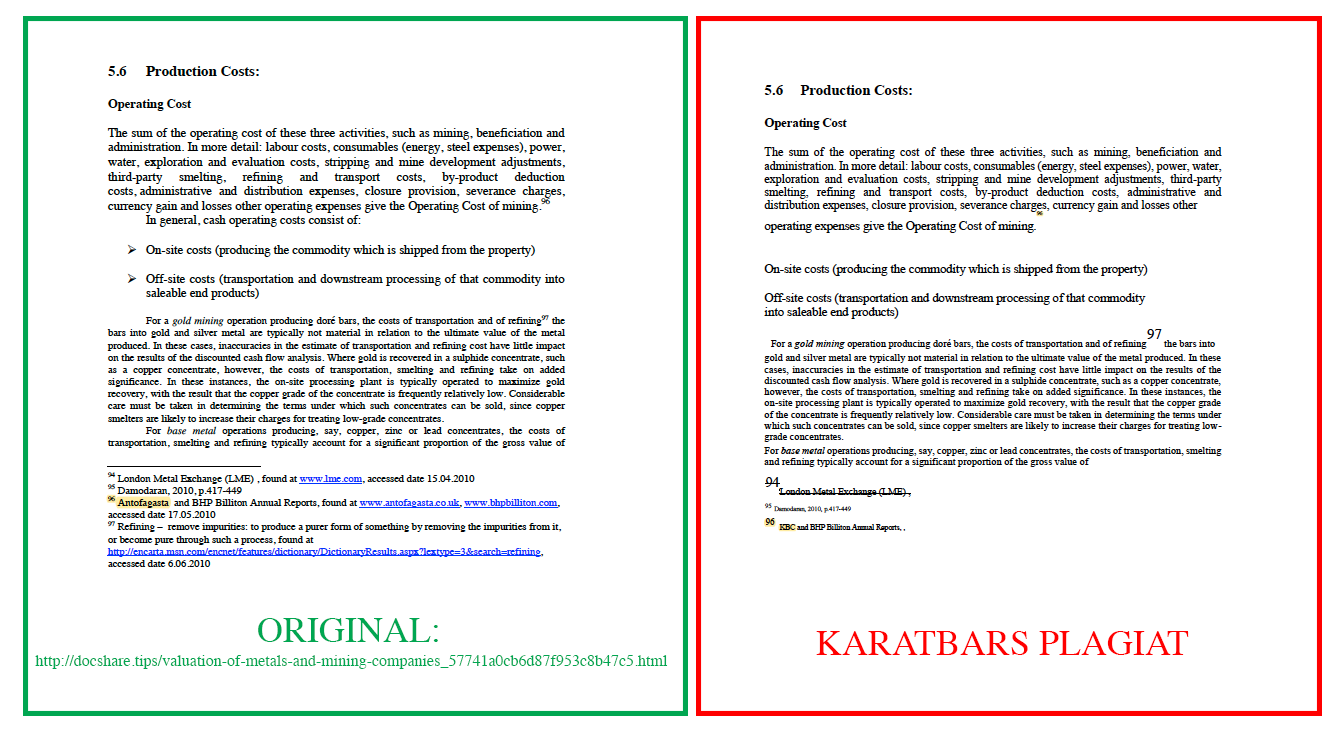
Die Minen in Madagaskar, die nach Angaben eines selbst in Auftrag gegeben Bewertungsgutachtens bei einem unbekannten Revisor aus dem Frankfurter Raum über angeblich 22 Tonnen an Gold-Potenzial verfügt, sind unter den Lizenznummern 39756 und 15745 angeführt, welche der Firma TSARAVINTANA MINING S.A.R.L.U. gehören und für den Abbau von Rubinen, Saphiren, Uran, Rhodium, Malachit und Mica, aber nicht für Gold, freigegeben sind.

Für Kopfschütteln sorgen dann auch die Bilanzen der GSB Gold Standard Banking Corporation AG (ehemals GCC Gazella Corporate Capital AG)  aus Düsseldorf, der kroatischen Tochterfirma White Rock d.o.o. und der KBC Inc. selbst. Laut dem Bewertungsbericht sind beide Firmen zu jeweils 50% Teilhaber der Goldmine “Fort Dauphin” auf Madagaskar.

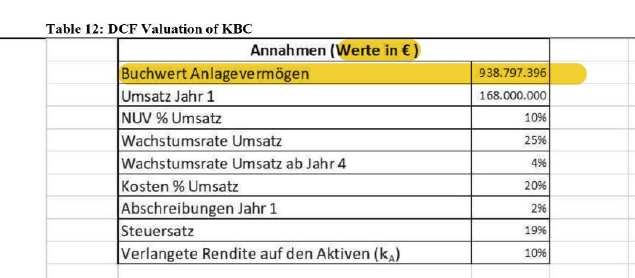
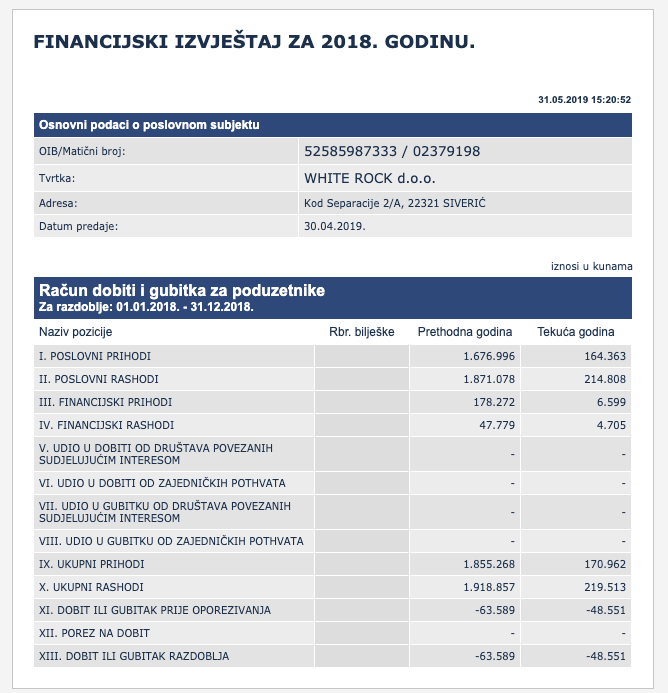
Schaut man in die Gewinn- und Verlustrechnung für das Finanzjahr 2018 der kroatischen White Rock d.o.o. weist diese sogar einen Verlust von 48.551 Kuna aus (etwa 6.500 Euro). In der Aktiva sucht man vergeblich einen entsprechenden Vorratsvermögenswert, der dem errechneten Buchwert im Bewertungsbericht von 938,8 Millionen Euro und der 50%igen Anteil an Fort Dauphin nur annähernd darstellen würde.

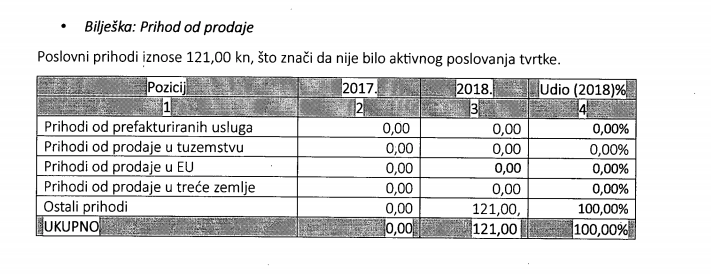
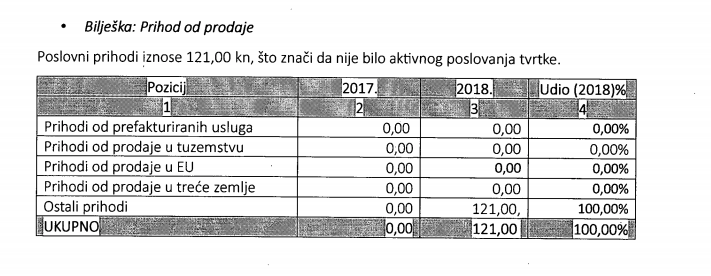
Es gibt auch eine zweite, namensähnliche kroatische Firma “White Rock Minerals d.o.o.” unter der Registernummer 57875783006. Der Bilanzbericht der White Rock Minerals d.o.o. weist einen Umsatz von 121 Kuna aus, was circa 16 Euro entspricht, sowie einen Verlust von 15.663 Kuna (etwa 2.100 Euro).

Kurioses lässt sich auch im Whitepaper der Karatcoin Bank finden. Dort heißt es im Haftungsausschluss bezüglich der Goldmine, dass diese u.a. vielleicht gar nicht existieren würde: “The KBC FOUNDATION GOLD MINE is located in Madagascar and shall produce gold that will be required by the KaratGold Ecosystem. For example, the gold shall be used for the CASHGOLD, which shall have a link to the KaratGold Coin. Whether and to which extent the gold mine exists, whether its managers are professional, how the license situation is and whether it will produce substantial quantities of gold and at market conform prices, is open. (…) If such risks materialize, the KaratGold Ecosystem and with it the KaratGold Coin as well as the KARATCOINBANK COIN and the KARATCOINBANK WORLD ecosystem could collapse. A total loss of the funds invested in the KARTCOINBANK COIN could be the consequence (KaratCoinBank Whitepaper, Seite 14).

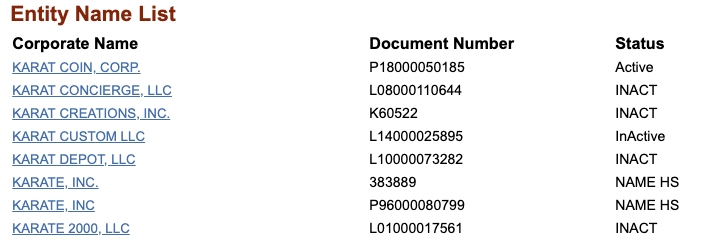
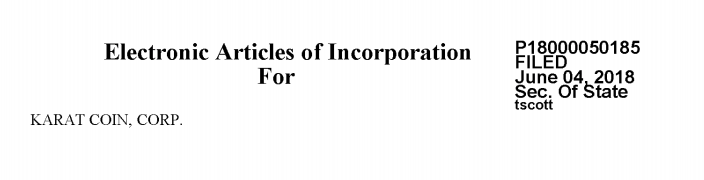
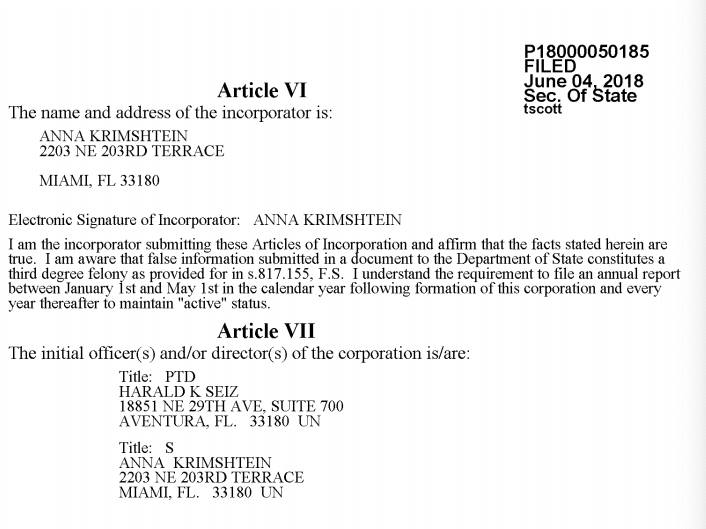
Und dann ist da noch die vermeintliche Bank in Miami. Vor etwa 8 Monaten auf einer Veranstaltung in Atlanta verbreiteten Karatbars-Führungskräfte unwahre Behauptungen. “Haben Sie das Bankgebäude in Miami gesehen, haben sie gesehen, dass die Bank echt ist, haben sie das Bankgebäude gesehen, hat es euch gefallen?”, schreit Dirk Zahlman von den Bühne und versucht Glaubwürdigkeit beim Publikum herzustellen. Die Bank in Miami hätte 100 Millionen US-Dollar gezeichnetes Kapital, wobei lediglich 50 Mio. erforderlich gewesen wären. Der CEO Harald Seiz und Vorstandsmitglied Josip Heit lassen nicht kleckern, wenn dann wird richtig geklotzt. Wir schauen ins dortige Unternehmensregister und suchen nach Firmen die “Karat Coin”, “Karat Gold”, KaratCoin Bank”, “Karat Bank”, “KBC” usw. im Namen enthalten haben. Vergeblich. Der einzige Treffer ist eine Corporation unter dem Namen “KARAT COIN, CORP.” mit Sitz in New York, aber keine Bank in Aventura, Miami. Lediglich als Business-Adresse wurde der Raum Nr. 700 an der 18851 NE 29th Ave in Aventura, Miami, angegeben. Bei dem an diesem Adresse befindlichen Bürogebäude handelt sich jedoch um kein Bankgebäude, sondern vielmehr um Büros, die man auch auf stündlicher Basis anmieten kann (https://www.davincivirtual.com/loc/us/florida/aventura-virtual-offices/facility-974). Bei dem Raum Nr. 700, aus der heraus die Corporation angeblich operiert, handelt es sich um ein sog. Virtual Office, welches man schon ab rund 60 US-Dollar pro Monat anmieten kann.

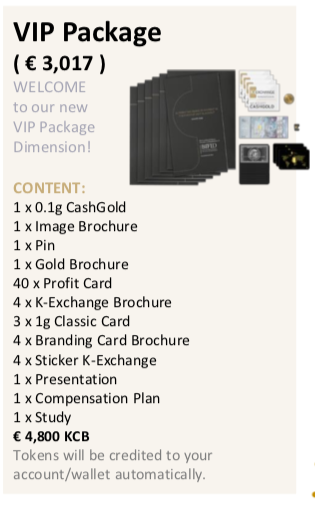
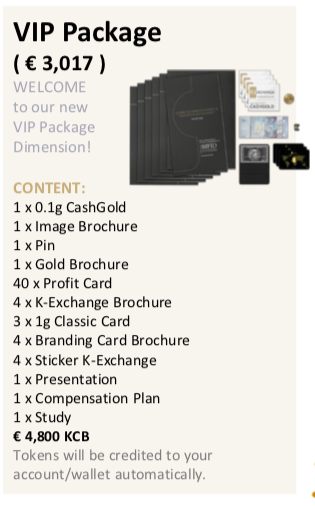
Gold bestellt man bei Karatbars entweder als sog. Clasic Cards (Sammlerkarten) oder CashGold Scheinen in Stückelungen zu je 0,1 g, 0,2 g, 0,4 g, und 0,6 g, die dann in den Profit-Packages beinhaltet sind. Dazu bekommt man noch eine gewisse Menge an der KBC/KCB Kryptowährung, die faktisch wertlos ist, da sie, wie bereits dargelegt, nicht durch Gold abgedeckt ist. Das günstigste Paket kostet 150 Euro und man erhält gerade mal 0,2 g CashGold. Ein Gramm Feingold liegt bei etwa 38 Euro; der Wert aus dem Paket liegt somit bei mickrigen 7,60 Euro, da die angebliche Goldabsicherung des KBC/KCB Coins nicht nachgewiesen ist. Ob es eine gute Entscheidung ist, 150 Euro für 0,2 g CashGold zu bezahlen, bleibt jedem selbst überlassen.

Auch die Gold-Argumentation erscheint widersprüchlich: Auf einer Seite ist davon die Rede, dass das Gold, das üblicherweise in Form von Barren oder Münzen vorliegt, aufgrund seines beträchtlichen Wertes jedoch eher nicht als Zahlungsmittel für eher geringfügige Beträge angegeben wird (beispielsweise zum Erwerb von Gegenständen des täglichen Bedarfs), da eine hierfür erforderliche Stückelung nicht vorgesehen ist oder die Handhabung aufgrund eher geringer Goldmengen unpraktisch erscheint. Daher setzt Karatbars auf Kleinstückelung in Form von sog. CashGold Scheinen. Die praktische Anwendung von CashGold erscheint jedoch zweifelhaft – mit einem CashGold Schein kann man vergeblich versuchen, die Kassiererin an der Supermarktkasse oder an der Tankstellen zu überreden, seinen Einkauf damit zu bezahlen. Und bestellt man CashGold bei der Karatbars GmbH wird dieses auch nicht sofort geliefert. Die einzige Option während des Bestellvorgangs lautet “Storage”, es soll angeblich gelagert werden. Andererseits kann man von Sammlerkarten und CashGold sicherlich nicht von einer “Investition in die Zukunft” reden.

Am 4. Juli 2019 könnten Investoren laut Unternehmensangaben 100 KBC in 1 Gramm pures Gold auf der “Gold Independence Days”-Veranstaltung im Bellagio in Las Vegas umtauschen. Das dürfte für Karatbars auch kein Problem sein, denn schließlich hat man mit teuren Paketen genug Geld eingesammelt. Wer sich dann trotzdem über CashGold Scheinen freuen sollte, kann versuchen in Las Vegas mit CashGold-Scheinen einzukaufen.

Bis 2020 wollen die Karatbars International GmbH und die GSB Gold Standard Banking Corporation AG mit ahnungslosen Anlegern so eine Marktkapitalisierung von 100 Milliarden US-Dollar erreichen. Windige Unternehmer wie Harald Seiz und Josip Heit haben derzeit leichtes Spiel. Menschen fürchten sich vor Preissteigerungen und Wirtschaftskrise, bei der Geldanlage sind Produkte, die Schutz vor Inflation versprechen, gefragt. Schwer nachvollziehbare Firmenstrukturen, Goldminen, die keine sind, und eine Kryptowährung, die auf nichts aufbaut – das ist die Karatbars-Bilanz. Investition in die Zukunft? Wohl kaum.

Die erste Kryptowährung der Welt, die angeblich durch Gold gedeckt ist, entpuppt sich nun als Ponzi-System und zum möglicherweise größten Schwindel der letzten Jahre. Ob der Fall Karatbars zum größtem Goldskandal noch vor dem Bre-X Mining Goldscam (https://youtu.be/v00GzKgBL7Q) avancieren kann, werden die nächsten Wochen sowie die angelaufenen Ermittlungen der Staatsanwaltschaften und entsprechender Behörden zeigen. Jüngst verschwanden immer mehr betrügersiche Kryptofirmen spurlos von der Bildoberfläche oder gingen bankrott; man erinnert sich nur an Tessline oder Omnia… Fazit: Finger weg von allen Firmen im Karatbars-Geflecht, wen man am Ende nicht leer ausgehen will.

Die Enthüllungen rund um die Karatbars-Machenschaften sind lediglich die Spitze des Eisbergs. Was und wer genau hinter Karatbars und der GSB Gold Standard Banking Corporation steckt und woher das angebliche Vermögen stammt, dessen Herkunft sich nicht durch CashGold-Scheine und Gold-Sammlerkarten erklären lässt, erfahren Sie im nächsten Teil.

Teil 2 jetzt Online hier : https://investreport.home.blog/offentliche-blamage-fur-karatbars-beim-falschen-und-kopieren-ertappt-geht-es-uberhaupt-noch-dreister/

English version https://investreport.home.blog/the-case-of-karatbars-the-biggest-gold-pyrmid-scheme-of-all-times/

The Case of ‘Karatbars’ – the Biggest Gold Pyramid Scheme of All Times? (Part 1)

The Case of ‘Karatbars’ – the Biggest Gold Pyramid Scheme of All Times?

Crypto currencies are currently en vogue and everyone is trying to get a piece of the action in one way or another. Each of these brings with it the aspirations of making money from the comfort of their home with only a few short clicks of a mouse. And, what’s better? A seemingly lucrative investment opportunity in a crypto currency which likens its risk to a zero sum game. Even better, just imagine if this opportunity is backed by, arguably, the most valuable of all commodities, gold. While considered crisis proof, gold is the most valued of all precious metals, however, as any real investor knows, there is no such thing as “crisis-proof.”

Of all the network marketing companies built on the crypto currency phenomena, there is none as dubious as Karatbars International GmbH. In short, KaratBars is just another pyramid scheme lining the pockets of the few founders, and removing hard earned savings from many good-faithed, unfortunate people. With an effort to show glamour and prestige, the unscrupulous founders of Karatbars are promising riches upon riches, all backed by gold reserves. The case of Karatbars starts in Stuttgart, Germany with Founder and Managing Director of Karatbars International GmbH, Harald Seiz, and his cohort, Croatian Board Member, Josip Heit. Allegedly, the KaratGold Coin (KBC) and the Karatbank Coin (KCB) claim to be back by gold reserves, you know, as in the gold standard that used to apply to the US dollar. And, here we have it, yet another crypto currency scam but, this time, with a special twist of adding in the “underwritten” by gold. Just like the many others who came before them, KaratBars lacks any factual proof and even less credibility, even at this early stage. According to the company, more than 500,000 people are said to have “invested” in the KBC and KCB Coin. With the prospect of dreamlike returns, these self-prophecitized financial geniuses are just a lower class Bernie Madoff, taking money from small individuals and using it to pay back the dividends and/or returns they owe from those who entered the pyramid before them. Whether or not these extraordinary returns are actually based on gold reserves, is only another sensationalized fairytale like those who came before them. As soon as the cash inflow stops and they have to start selling the Rolls to make the next set of redemptions or dividends, the real story will be revealed. Does Karatbars actually have the gold to hedge the KBC and KCB Coin? How do you establish credibility with unsuspecting investors? Our international research team has investigated this matter and uncovered a series of unbelievable brazen machinations of the self-proclaimed entrepreneurs.

The master plan starts with the development of a video shoot using a freelancer to act as their Interviewer in Hong Kong in late March 2019. The video is designed to give an impression of a serious interview with Harald Seiz and Josip Heit in a company-owned office (https: / /youtu.be/tmpndhxpFdE), a visit to a one-day rental of a staged vault in Hong Kong for 2,500 EUR at the Royal England Safe Deposit Box Ltd., two mines in Africa, a staged bank opening ceremony in Miami and a self-proclaimed Gold Independence Day to be held in Las Vegas on July 4, 2019.

The video starts on the streets of Hong Kong with Josip Heit, Harald Seiz and Romanian, Alex Bodi, who completes the management team, on a sunny March day, surrounded by bodyguards, as they make their way to a safe deposit company established in 2017 under the name of „Royal England Safe Deposit Box Ltd.“ Alex Bodi elegantly pushes a small aluminum carry-on suitcase with apparent ease that allegedly holds a total of 280 kg of gold. As the video commentator states (https:/ /youtu.be/ueNLACYpj3M) on the same day, 1.12 tons of gold, were already stored in the safe deposit on behalf of the Karatbars investors. Also, in this same video, Seiz comments that they had now stored 40 kg of gold, which corresponds to the actual scenario not the overindulged lies we stated earlier. It’s easy to get confused in this sea of lies.

Why are two German-based entrepreneurs, Harald Seiz and Josip Heit, looking for a Hong Kong vault to store their gold? Harald Seiz is Managing Director of both Karatbars International GmbH in Stuttgart and GSB Gold Standard Banking Corporation AG in Düsseldorf, and Josip Heit is a member of the Executive Board. The answer is simple. Tax evasion. If they were to transfer income to and from Germany, they would be liable to the German tax authorities. Further, under German law, the onus is on the company to prove that Karatbars GmbH / GSB Gold Standard Banking Corporation AG owns any gold. If they did, they would be able to avoid the legitimacy test required under German tax code. Finally, who wants to pay taxes on an imaginary amount of gold. It should also be noted that anyone can rent a box in the vault of the safe-deposit bank. Anyone can have a safe deposit box as long as you pay the rent. Whether it’s 1.4 tonnes of fine gold or real gold, has never been proven. The bank they supposedly visit in Miami, that they own, is a Regus building, you know the shared rental space that you can pay by the hour. It is much more likely, the „fine gold“ comes from the props department of a local video production firm. In addition, it is also known that tons of counterfeit gold bars are produced in China, which are sold in large quantities. Shoppers can choose size and embossing.

The Karat Gold Coin (KBC) and the KaratCoin Bank Coin (KCB) are supposedly underwritten by company owned gold mines in Madagascar and Guinea. The official company presentation states that the Guinean MIne has a deposit of 700 tons of gold. This statement is clearly in contradiction to the statement of the Ministry of Mines and Geology of the Republic of Guinea, which estimates the total gold reserves of the whole country at 700 tons and estimates the annual gold production at about 8 to 10 tons. The Gold Standard Bank Corporation AG or any other company in the Karatbars network cannot identify even one significant gold producer in the entire country, let alone any that own a gold mine. It is important to note that the largest gold producers in Guinea are the Gold Corporation (SAG, an AngloGold Ashanti subsidiary) at around 9.9 tons and the Dinguiraye Mining Corporation (SMD) at 8.5 tons gold per year. The Mining Licenses page of the Ministry of the Republic of Guinea http://guinee.cadastreminier.org/fr/ does not contain any active or applied for license of any company affiliated with the „KB Universe“, neither the alleged bank in Miami or the GSB Gold Standard Banking Corporation AG from Dusseldorf.

The mines in Madagascar, which according to a self-commissioned appraisal report from a rather unknown auditor in the Frankfurt area suggested that the company owns 22 tons of gold potential, listed under the license numbers 39756 and 15745. However, these license numbers are registered to TSARAVINTANA MINING S.A.R.L.U., not KaratBars and are for the mining of rubies, sapphires, uranium, rhodium, malachite and mica, not gold.

For the financial year 2018, the Croatian White Rock d.o.o. shows a loss on the income statement of 48,551 kuna (about 6,500 EUR). Based on a monetary unit in gold, that assets would be extraordinary, to the tune of at least the sums they quote in their videos. Look high and low and you will never find the asset valuation nor a corresponding book value that could even be substantiated in the slightest or approximated in the self-commissioned valuation report of 938.8 million EUR and the 50% stake in Fort Dauphin.

There is also a second, similar-named Croatian company „White Rock Minerals d.o.o.“ under the registration number 57875783006. The White Rock Minerals Annual Report d.o.o. shows annual revenue of 121 kuna, which corresponds to about 16 EUR, and a net loss of 15,663 kuna (about 2,100 EUR).

Curiosities arise from their own Whitepaper, about KaratCoin Bank. In the disclaimer regarding the gold mine, it states that the gold mine might actually not even exist: “The KBC FOUNDATION GOLD MINE is located in Madagascar and shall produce gold that will be required by the KaratGold Ecosystem. For example, the gold shall be used for the CASHGOLD, which shall have a link to the KaratGold Coin. Whether and to which extent the gold mine exists, whether its managers are professional, how the license situation is and whether it will produce substantial quantities of gold and at market conform prices, is open. (…) If such risks materialize, the KaratGold Ecosystem and with it the KaratGold Coin as well as the KARATCOINBANK COIN and the KARATCOINBANK WORLD ecosystem could collapse. A total loss of the funds invested in the KARTCOINBANK COIN could be the consequence (KaratCoinBank Whitepaper, page 14).

Approximately eight months ago, at an event in Atlanta, Karatbar executives spread untrue statements from the stage. Yes, you heard correctly, they lied and it’s documented on camera. „Did you see the bank building in Miami, did you see that the bank is real, did you see the bank building, did you like it?“, Dirk Zahlman, a former leader, screams from the stage trying to establish credibility with the audience. The bank in Miami would have $100 million in subscribed capital, with only $50 million required. Harald Seiz and Josip Heit do not let it spill, if then it is properly paddled. We looked into the local business register for companies that have included „Karat Coin“, „Karat Gold“, KaratCoin Bank „,“ Karat Bank „,“ KBC „etc. The only hit is a corporation under the name „KARAT COIN, CORP.“, headquartered in New York, but no bank in Aventura, only a business address being room number 700 at the 18851 NE 29th Ave, in Aventura. However, the office building at this address is not a bank, but rather offices that are rented on an hourly basis (https://www.davincivirtual.com/loc/us/florida/aventura- virtual-offices / facility-974) Room No. 700, from which the corporation apparently operates, is what is known as a virtual office, which can be rented for as little as $60 per month.

Gold is ordered at Karatbars, either as Classic Cards or CashGold notes in denominations of 0.1g, 0.2g, 0.4g, and 0.6g, which are then included in the profit packages. In addition, when joining the network, you are entitled to a certain amount of the KBC / KCB cryptocurrency, which is in fact worthless, because there is no gold reserve supporting the foundation. To join the MLM, the cheapest package costs 150 EUR which gives you 0.2g of cash gold. One gram of fine gold trades around 38 EUR; the value from the package is, thus, undervalued to a mere 7.60 EUR. Given that the gold commodity value of the KBC / KCB Coins has yet to be established, you must decide for yourself whether it is a good decision to pay 150 EUR in return for the lessor value of 0.2g CashGold. You can’t say you weren’t warned.

The Gold argument also seems contradictory: on one side, there is talk that the gold, which usually circulates in the form of bars or coins, however, due to its considerable value, is not issued as a form of currency for rather small amounts such as grocery shopping or gas for your car. Just like all other commodities and currencies, since a denomination is required to exchange as a currency, gold is impractical. People are not going to walk around with gold bars in their pocket. Karatbars relies on small denomination in the form of CashGold notes. The practical application of CashGold, however, seems doubtful – with a CashGold bill, one can try to persuade the cashier at the supermarket or at the gas stations to pay for their purchase… And, if you were to order CashGold directly from Karatbars GmbH it would not be delivered immediately. The only option during the ordering process is „storage“, gold is supposed to be stored. However, on the other hand, collectible cards and CashGold certainly cannot suggest an „investment in the future“.

According to the company, investors could convert 100 KBC into 1 gram of pure gold at the „Gold Independence Days“ event at the Bellagio in Las Vegas on July 4. That might not be a problem for Karatbars either, as they‘ll have enough money from the expensive packages Anyone looking for CashGold tickets can try shopping in Las Vegas with CashGold tickets. Good luck with that. Does Steve Wynn accept CashGold at the Wynn or the Bellagio? Go shopping or eat at Le Cirque and see if they accept CashGold as a payment method.

By 2020, Karatbars International GmbH and GSB Gold Standard Banking Corporation want to reach a market capitalization of $100 billion from unsuspecting investors. Windy entrepreneurs like Harald Seiz and Josip Heit are living the life of Riley at poor independent reps expense. People live in fear of increases of the interest rates and decisions of monetary policy that result in price increases and fiscal policies that ward off changes in the tax policies. Individuals would love to invest in products that promise protection against inflation. Hard-to-understand company structures, phony gold mines and a cryptocurrency based on nothing – that‘s the Karatbars history. Investment in the future? Hardly likely.

The world‘s first cryptocurrency, backed by gold, appears to be another Ponzi system and possibly the biggest fraud in recent years. The case of Karatbars is quite similar to the infamous gold scandal, Bre-X Mining Goldscam (https://youtu.be/v00GzKgBL7Q). We have it on good word that Federal authorities have been investigating the case, and we might see the results over the next couple of weeks.

Recently, more and more fraudulent crypto companies have disappeared without a trace or went bankrupt; remember Tessline or Omnia? In conclusion, do yourself a favor and stay away from anything related to the Karatbars network.

We will continue to follow this story and how it reveals itself publicly. This is only the foundation. We have a long way to go to reach the tip of the iceberg. Stay tuned for Part II of Unveiling the Karatbars Scam.

German Version / Deutsche Version https://investreport.home.blog/der-fall-karatbars-groster-goldbetrug-aller-zeiten/

Karatbars Scam – Beim Fälschen und Kopieren ertappt. Geht es überhaupt noch dreister? Teil 2

Akte KB/1/06.19/Ponzi

Die Skandalwelle um Karatbars International GmbH aus Stuttgart, der GSB Gold Standard Banking Corporation AG, Düsseldorf (ehemals GCC Gazella Corporate AG) sowie der vermeintlichen KaratCoin Bank reißt nicht ab. Wir erinnern uns an die nicht-existente Bank im für etwa 60 Dollar angemieteten Büro in Florida sowie an den sorfältig gescripteten Videodrehtag in Hongkong und dem angemieteten Security Vault bei der Hongkonger Schließfachfirma namens Royal England Safe Deposit Box Ltd. Es wurde scheinbar an alles gedacht, nur nicht an Details: 280 kg vermeintlichen Goldes wurden in einem Handgepäck-Koffer zur Schließfachfirma geschoben, der gerade mal in die Flugzeugkabine passt; mehrfach widersprüchliche Angaben beim “Goldbestand” – nur, nun ja, es handelte sich ja gar nicht um echtes Gold! Und ganz und gar nicht zu vergessen: Es gibt ja gar keine Goldlizenz für die angebliche Mine in Madagaskar oder Guinea oder wo auch immer… Eigentlich gibt es überhaupt kein Gramm Gold in den vorgenannten Minen, ganz abgesehen davon, dass weder die KaratCoin Bank noch die GCC, nun GSB GSB Gold Standard Banking Corporation AG, eine Mine besitzen.

Mit dreisten Lügen ergaunern sich Harald Seiz, Josip Heit, Alex Bodi ein Luxusleben. Von den Büroräumen aus in Stuttgart werden Tag für Tag zigtausende Opfer angelockt. Der Betrug basiert auf einem simplen Schneeballsystem, bekannt als das Ponzi-Schema, benannt nach dem italienischem US-Immigranten Charles Ponzi, der das Prinzip in den 20er Jahren nutzte. Er gründete eine Finanzgesellschaft mit sein Slogan: “Borg mir dein Geld und du bekommst 50 % Zinsen.” Zigtausend Menschen vertrauten ihm 65 Milliarden Dollar an. Er nutzte das neue Geld, um die alten Investoren auszuzahlen – ein typisches Schneeballsystem. Als es nicht mehr ausreichend neue Investoren gab, um die alten auszuzahlen, brach alles zusammen. Harald Seiz, Josip Heit, Alex Bodi und Co. nutzen die gleiche Technik. Regelmäßig werden Provisionen ausgezahlt auf ein Produkt, das es gar nicht gibt. So kostet das “VIP Paket” ganze 3.017 Euro und enthält nebst eine ganze Menge Papier gerade mal 0.1 Gramm sog. CashGold und wertlose 4.800 KCB Coins, denn wir erinnern uns, der Coin ist durch kein einziges Gramm Gold abgesichert.

Etwa 40 Euro kostet 1 Gramm Gold, bedeutet dass 0.1 Gramm Gold gerade mal lappige 4 Euro kosten, ganz abgesehen davon, dass CashGold Scheine nirgendwo akzeptiert werden. Über 3.000 Euro für etwa 0.1 Gramm Gold im Wert von einer Schachtel Zigarette und wertlose, durch nichts abgesicherte KCB Coins hinzublättern, ist ein typisches Merkmal illegaler Schneeballsysteme. Auf das VIP Paket werden bis zu 60 % an Provisionen ausgeschüttet, was bedeutet, dass 99,9 % der Provisionen auf neue Mittelzuflüsse gezahlt werden, und nicht auf den eigentlichen Produktwert (0.1g Gold, etwa 0.13 % des Paketwertes).

Doch hier geht es um weitaus mehr, als das Betreiben eines einzigen riesigen Ponzi-Systems. Bei Karatbars handelt es sich um einen großangelegten, gewerbsmäßigen Betrug, Diebstahl geistigen Eigentums sowie um schamlose Dokumentenfälschungen.

Karatbars, KaratGold und wie auch immer alle Firmen in diesem betrügerischen Geflecht heißen mögen, rühmen sich mit der ersten Kryptowährung, die durch echtes Gold abgedeckt sei. Dazu soll auch eine Mine in Madagaskar herhalten, die eigentlich gar keine Lizenz zur Goldexploration besitzt (wir haben bereits berichtet). Im “KBC Whitepaper” steht folgendes: “Dieses weltweit einzigartige Konzept umfasst auch die uneingeschränkte Abdeckung der Kryptowährung durch echtes Gold. Um diese reale, physische Abdeckung jederzeit gewährleisten zu können, hat KaratGold zu diesem Zweck die Beteiligung an einer voll ausgebauten, funktionierenden Goldmine in Madagaskar initiiert und diese nun erfolgreich abgeschlossen. Die Präsenz auf Madagaskar entspricht einem aktuellen Wert von bis zu 5 Milliarden Euro.” (Original: “This concept, which is unique in the world, also includes unrestricted coverage of the cryptocurrency by real gold. In order to be able to guarantee this real-physical coverage at any time, KaratGold initiated the participation in a fully developed, functioning gold mine in Madagascar for this purpose and has now successfully completed it. The presence on Madagascar corresponds to a current value of up to € 5 billion.” Ganz abgesehen davon, dass hier wieder mal geschlampt wurde, was konsistente, deckungsgleiche Angaben angeht (im Whitepaper werden der Mine bis zu 5 Mrd. Euro Wert attestiert, während im Audit sowie im Valuation-Paper von einem Fünftel des vorgenannten Wertes die Rede ist – 0.94 Mrd), baut das gesamte Konzept von Karatbars und deren Gauner Harald Seiz, Josip Heit, Alex Bodi, Ovidiu Toma & Co. auf einer dreisten Lüge auf.

Die Wahrheit ist: Der KBC und KCB Coin noch irgendeine andere Kryptowährung von KaratCoin Bank oder Karatbars sind durch einen einzigen Gramm Gold abgesichert. Das ergaben weitere gründliche Recherchen und Analysen des Investreport-Teams. Weder das Bewertungs- bzw. Valuation- noch das Audit-Paper können diese Tatsache aus der Welt schaffen.

Im Gegenteil, das Bewertungspapier unter dem Titel “Bewertung von Metallen und Bergbau / Madagaskar-Bewertung der KBC Foundation” (Im Original: “Valuation of Metals and Mining / Fort Dauphin, Madagascar Valuation of KBC Foundation”) ist ein Totalplagiat. Als Totalplagiate werden Dokumente bezeichnet – simpel ausgedrückt – die 1:1 schamlos von anderen Autoren geklaut wurden. Der Plagiat-Autor Markus Mincker aus Frankfurt am Main (“PWC & MM Revisors”, Anmerkung: Nein, PWC ist lediglich hier ein erfundener Name, damit es einen besseren Eindruck macht) fälschte im Auftrag vom Möchtegern-Saubermann Harald Seiz und seiner nicht-existenten KaratCoin Bank und absolut wertlosen Karatbit Foundation die Bewertung der Madagskar-Mine und übernahm unverändert (bis auf einen Namensaustausch) das Original-Dokument aus dem Jahre 2010 seitens Frau Svetlana Baurens aus der Schweiz, nachzulesen hier: http://docshare.tips/valuation-of-metals-and-mining-companies_57741a0cb6d87f953c8b47c5.html

Fangen wir von vorne an und sehen wir uns die Dokumentfälschung sowie die schlampigsten Fehler genauer an.

Kapitel 1 “Einleitung” (im Original: “Introduction”): Auffällig durch das gesamte Bewertungspapier hinweg sind die übergroß eingefügten Fußnoten. Auf Seite 9 und 10 wurden die Fußnoten 8, 9 und 12 vergessen. Auf Seite 7 gibt es eine Fußnote 1, jedoch keine dazugehörige Quellenangabe. Auf Seite 8 wurde ganz salopp der Original-Firmename “Antofagasta” durch “KBC” ausgetauscht. Im Original heißt es: “Chapter 8 is a practical chapter. A copper mining group, Antofagasta, is valued with different valuation methods.” In der KBC-Fälschung heißt es: “Chapter 8 is a practical chapter. A copper mining group, KBC, is valued with different valuation methods.” Dumm nur, dass die Karatbars-Fälscher vergessen haben, auch Gold zu erwähnen, und nicht nur Kupfer.

Kapitel 2 “Bewertungsmodelle in der Bergbau- und Metallindustrie” (im Original: “Valuation models in mining and metals industry”): Auf Seite 13 heißt es, dass im Bergbau mehrere Jahre (5-10) dauert, bis die Mine funktional ist, also tatsächlich Gold fördern kann. Dumm nur, dass man wieder schlampig gefälscht hat, denn im KBC Whitepaper heißt es ja, dass die Mine auf Madagaskar völlig operabel und funktional sei (“In order to be able to guarantee this real-physical coverage at any time, KaratGold initiated the participation in a fully developed, functioning gold mine in Madagascar for this purpose and has now successfully completed it.

Oben: Gefälschtes Karatbars Bewertungsdokument

Unten: Das Original von Frau Svetlana Baurens

Und natürlich hat man auch hier vergessen, auf Fußnoten zu achten (Nummer 35 fehlt).

Kapitel 3 “Bewertungen von Explorationsliegenschaften” (im Original: “

Valuations of Explorations Properties”): Auch hier wurde Buchstabe für Buchstabe unverändert übernommen, ganz zu schweigen von vergessenen Fußnoten. Spannender wird es im 4. Kapitel namens “Bedeutung der Zyklen bei der Bewertung von Bergbau- und Metallunternehmen” (im Original: “Cycle importance in valuation of mining and metals companies”). Nicht nur dass Seite 31- wie alle anderen Seiten auch – unverändert übernommen wurde, sondern hier wurde dann auch noch gefälscht: Die Illustration Nummer 3 hat als Quellenangabe die Basinvest AG aus der Schweiz, der Original-Herausgeber mit Frau Svetlana Baurens, während die Karatbars-Fälschung die richtige Quellenangabe einfach gelöscht hat und stattdessen die kroatische White Rock Firma des kroatischen Karatbars-Vorstandsmitgliedes Josip Heit angeführt hat. Auch die entsprechende Fußnote unter der Nummer 62 wurde gefälscht, indem “Basinvest” durch die Verluste schreibende “White Rock” getauscht wurde.

Im Kapitel 5, auf Seite 44, geht es mit dem Fälschen schamlos weiter. Herr Markus Minker fälscht die Fußnote Nummer 96 indem er die “Antofagasta” Original-Jahresberichte aus dem Jahre 2010 ganz plump durch “KBC” ersetzt. Natürlich haben die Karatbars-Gauner deshalb die Fußnote aus dem Original-Dokument nicht völlig übernommen, da es KBC im Jahr 2010 noch gar nicht gab.

Kapitel 6 und 7 wurden auch vollständig vom Original abgekupfert. Kapitel 8, wo es um die eigentliche Minen-Bewertung geht, wurde nicht nur vollständig kopiert sondern umfangreich gefälscht. Da es im Original-Dokument um die Mine in Chile der Firma “Antofagasta” geht, wurde dieser name überall durch “KBC” ersetzt. Des Weiteren werden die Statement-Quellenangaben sowie die Zeitangabe für die Bewertung im letzten Absatz wie folgt gefälscht: “Antofagsta” wird durch “KBC” ersetzt, die Bank “Merrill Lynch” und das Jahr “2010” durch “GCC” und “März 2014” (gemeint hier ist die GCC Gazella von Josip Heit, nun umbenannt in GSB Gold Standard Banking Corporation AG). Die Investmentfirma “Raymond James” und “FD Capital” wurden durch “White Rock Minerals” (die kroatische Firma von Josip Heit) ausgetauscht.

Im Unterkapitel 8.2 geht es dann richtig zur Sache. Die Antofagasta-Mine namens “Los Pelambres” wird durch “Fort Dauphin” ersetzt, Tippfehler werden übernommen “”Company date” statt “Company Data”, und es werden sogar die gleichen Kupfer-Mengen übernommen (442.500 Tonnen), die als “caco3 Mineral” umfunktioniert werden. Die restlichen 3 Minen werden aus der Tabelle rausgeschnitten. Man hat jedoch in allem “Fälschungsfieber” vergessen, auf die konsistente Angabe von Goldmengen zu achten. Statt 22 Tonnen Gold, wie in der manipulierten Tabelle sowie an weiteren Stellen im Bewertungspapier und im “Audit” angegeben wurde, werden lediglich 600 Kilogramm erwähnt.

Im KBC-Bewertungspapier werden des weiteren auf Seite 59 ff. Tabellen-Quellenangaben durch WR (White Rock) und GCC ersetzt und die verschiedenen Mineralien werden durch andere ausgetauscht. Auf Seite 60, Illustration 15, bedient man sich der Minen-Produktionsstätten der Firma Antofagasta und benennt daher “Antofagasta Global Operations” in “KBC Global Operations” um.

Das komplette Kapitel 8 wurde gefälscht durch oben dargestellte Manipulationen. Daher verzichten wird einfachheitshalber auf weitere Beispiele, denn jeder kann das Original und die Fälschung selber frei einsehen. Amüsant fanden wir allerdings noch die lächerlichste, oder besser gesagt, die dümmste aller Fälschungen auf Seite 66 im Bewertungspapier:

Der Aktienpreis der Firma Antofagasta wird durch “Token Price KBC” ersetzt und Bloomberg als Quellenangabe muss der Krypto-Austauschbörse HitBTC weichen. So stellt die manipulierte Tabelle dar, dass es HitBTC bereits 2004 gegeben haben muss und Kryptowährungen an Austauschbörsen auch schon vor 15 Jahren. Es war eher die Zeit von Napster, CD-Playern und mühseligen stundenlangen Downloads… In Tabelle 19 auf der gleichen Seite wird der Gewinn pro Aktie der Firma Antofagasta dann durch den Gewinn pro Token ersetzt, aber Moment mal, gab es den KBC Token bereits 2008?! Wir können nicht mehr aufhören zu lachen. Mal ehrlich, das Karatbars oder KBC Bewertungspapier ist nicht nur die schamloseste Kopie, die wir jemals gesehen haben, aber zudem auch noch die dümmste. Wir attestieren Karatbars und den Betrügern Harald Seiz, Josip Heit, Markus Mincker & Co. nicht nur Diebstahl geistigen Eigentums und Dokumentenfälschung, sondern auch einen bislang unerreichten Wert dieses Bewertungsdokuments: Ganze Nullpunkt Null. Selbst Toilettenpapier hat mehr Wert. Im Eignungstest für Betrüger fallen diese Schwindler eindeutig durch. Es hätte alles so schön sein können für Harald Seiz, Josip Heit und Co., aber das Internet lacht bereits über die die dreisten und skandalösen Machenschaften von Karatbars, KaratCoin Bank, Karatbit Foundation und der GSB Gold Standard Banking Corporation AG. Es bleibt auch spannend, was Ermittlungen in verschiedenen Ländern noch zu Tageslicht fördern werden. Wir sind uns sicher, dass hier noch reichlich Potenzial drinsteckt, den aktuellen Dummheitsrekord noch zu brechen. Im 3. Teil nehmen wir die Geldwäsche-Methoden über verschachtelte Firmen-Konstrukte sowie die Personen Harald Seiz, Josip Heit, Ovidiu Toma und Alex Bodi genauer unter die Lupe. Auf jeden Fall gilt: Finger weg von allen Firmen im KB-Geflecht: sei es von Karatbars, KaracCoin, Karatbit, KaratGold, White Rock, GCC, GSB. Der Countdown zur Schließung dieser Firmen beginnt – jetzt!

Karatbars Scam – Counterfeiting, Deception, and Plagiarism (Part 2)

Just when you thought the scandal surrounding Karatbars International GmbH, the Gold Standard Banking Corporation AG (GSB), (formerly GCC Gazella Corporate AG), as well as the phoney KaratCoin bank, couldn’t get any more audacious, it does. Remember the photo shoot in front of the non-existent bank in Miami? The one at the Regus office leasing building? Or, the Video Turning Day in Hong Kong at a phoney, rented Security Vault at the locker company, Royal England Safe Deposit Box Ltd? If a phoney locker company wasn’t enough, these fraudsters thought of everything, down to the 280 kg of fake gold bars stacked in a carry-on suitcase-sized to fit just right into the overhead compartment, and, of course, the repeated contradictory information about “gold stock” that was anything but gold, this plot thickens. Let’s not forget that the purported licenses for the gold mines in Madagascar and Guinea or some such place are also forgeries. In fact, there isn’t a single gram of gold in any of the asserted mines nor any reality to the KaratCoin Bank nor the Gold Standard Banking Corporation, owning any mine, not even a play toy for a five-year-old.

With their continued bold-faced lies Harald Seiz, Josip Heit, Alex Bodi are living a life of luxury at the expense of thousands of victims who daily pledge their hard-earned savings to for the promise of riches at the end of the rainbow. Each day this unfortunate story unfolds another brazen scam which is nothing more than a classic Ponzi scheme. Ponzi schemes also referred to as a pyramid scheme, are named after the Italian US immigrant Charles Ponzi, who used the fraudulent tactic in the 1920s. Mr Ponzi founded a finance company with the slogan: “Lend me your money, and you’ll earn 50% in interest.” Tens of thousands of people entrusted him with $65 billion when all was said and done. His practice: he used new funds invested to pay off the previous earlier investors that continued on and on until such a time that there were not enough new investors to pay off the old ones, and his entire model collapsed leaving many thousands broke. Harald Seiz, Josip Heit, Alex Bodi and Co. are involved in a modern day process of the like. Regular commissions are paid for a product that does not exist, essentially a promise of a future reward. To start, Karatbars flagship product, the “VIP package” costs a total of 3,017 €. In exchange for their 3,017 €, distributors receive a lot of meaningless paper, exactly 0.1 grams of suggested CashGold and a worthless sum of 4,800 KCB coins. Remember from our earlier report, the basis of this fraud alleges that these coins are underwritten by gold when in reality, there isn’t a single gram of gold to be had by anyone at Karatbars or their self-described gold mines in Africa. Unfortunately for the victims, the only gold is the figment of these unscrupulous founders imaginations.

One gram of gold costs approx. 40 €, which means that 0.1 grams of gold cost a modest 4 €. Dare we mention that CashGold bills are not accepted anywhere? The simple law of supply and demand in economics says that the price of something is only worth what someone else is willing to pay for it. If CashGold bills aren’t accepted as a payment mechanism anywhere, the value of nothing is nothing. Over 3,000 € for 0.1 gram of gold, not even the price of a cup of coffee, is worthless, making these unsecured KCB coins, a typical feature of illegal pyramid schemes. The VIP package pays commissions up to 60% which means that 99.9% of commissions are being paid on new cash inflows rather than the actual product value (0.1g of gold, about 0.13% of par value), suiting up as the second classic feature of an illegal pyramid scheme.

But this is about much more than running a single giant Ponzi system. The compilation of Karatbars is that of large-scale, commercial fraud, theft of intellectual property and shameless document counterfeiting.

Karatbars, KaratGold, and whatever the names of this deceptive network, boasts the first cryptocurrency secured by real gold. The mine in Madagascar is what these conmen use as the argument to back up this statement. In reality, as previously reported, the mine in Madagascar has no license for gold exploration. We got our hands on the “KBC White Paper”, analogous to their company bible which states: “This concept, which is unique in the world, also includes unrestricted coverage of the cryptocurrency by real gold. In order to be able to guarantee this real-physical coverage at any time, KaratGold initiated the participation in a fully developed, functioning gold mine in Madagascar for this purpose and has now successfully completed it. The presence on Madagascar corresponds to a current value of up to € 5 billion.” Surprise surprise, here we have yet another inconsistency. The white paper claimed the mine was valued up to 5 billion € whereas the audit and valuation papers that were presented publicly illustrated a value of 0.94 billion €, just one-fifth of the above-mentioned, yet again confirming the whole concept of Karatbars and its founding crooks are nothing more than a made up fairy tale.

Here is some more truth, coming from this web of lies. The research and analysis by the Investreport team found that the KBC, KCB Coin, and all cryptocurrency derived from the KaratCoin Bank or Karatbars are not backed by a single gram of gold. There isn’t a valuation or audit that can remove that very evident fact.

On the contrary. In the paper entitled “Valuation of Metals and Mining / Fort Dauphin, Madagascar Valuation of KBC Foundation” it appears that one of the KBC ringleaders, Markus Mincker from Frankfurt/Main (has plagiarised, in its entirety a report written originally in 2010 by Ms Svetlana Baurens from Switzerland. In the simplest of terms, KBC’s documents are not only fraudulent but rather stolen shamelessly from another author for a fraudulent purpose. These wannabe businessmen have created a phoney coin in a phoney company there is no reason to think that their documents wouldn’t also be phoney. This is most likely the doing of the wannabe-rico suave Harald Seiz, his non-existing KaratCoin Bank and worthless Karatbit Foundation. We need not mention that the Karabit Foundation assessment of the Madagascar mine is a blatant word-for-word copy of an original document drafted in 2010 by Mrs Svetlana Baurens of Basinvest in Switzerland. See for yourself, read here:

http://docshare.tips/valuation-of-metals-and-mining-companies_57741a0cb6d87f953c8b47c5.html

Let’s start from the beginning and take a closer look at the document falsification and its sloppy mistakes.

Chapter 1 “Introduction”: The oversized footnotes are evident throughout the document, suspiciously so. On pages 9 and 10, footnotes 8, 9 and 12 have been skipped, or forgotten or missed or who knows what. On page 7 there is a footnote 1, but no corresponding source. On page 8, we quite casually found the original company name “Antofagasta” which in all other references was replaced by “KBC”. If you are going to steal someone’s work, make sure you remove their name from it. Furthermore, as another example of the direct and blatant plagiarism, the original report states: “Chapter 8 is a practical chapter. A copper mining group, Antofagasta, is validated with different valuation methods.” The KBC forgery states:” Chapter 8 is a practical chapter. A copper mining group, KBC, is valued with different valuation methods.” It doesn’t make any sense that they could allow for such careless errors in their plagiarism. Make a note, Mr Seiz, next time you are going to steal someone else’s work, make sure you replace all the keywords, not just some.

Chapter 2 “Valuation models in mining and metals industry”: ” page 13 states that mining takes several years (5-10) for the mine to be functional, to quarry for gold. It’s just utter stupidity that the KBC leaders were sloppy on their version by stating that the mine in Madagascar is completely operable and functional: “In order to be able to guarantee this real-physical coverage at any time, KaratGold initiated the participation in a fully developed, functioning gold mine in Madagascar for this purpose and now successfully completed it.” , if it takes 5-10 years to develop a mine towards functionality, how did KBCs mine get done this quickly? Even if their la-la land if they decided to buy a mine that was almost ready for production, who in their right mind would sell a mine full of gold to these morons? Doesn’t make any sense, it’s absurd — just a farce. At least Bernie Madoff was a smart, well-educated guy. These clowns can’t even copy properly and forgot how to count to 12. The farce is endless.

Above: Fake Karatbars evaluation document

Bottom: The original by Mrs. Svetlana Baurens

And of course, embarrassingly so, another reference of not paying attention to the footnotes (number 35 is missing).

Chapter 3 “Valuations of Explorations Properties”: Yet again, letter by letter, was adopted unchanged, other than for the forgotten footnotes. Things get more exciting in Chapter 4, entitled “Cycle importance in valuation of mining and metals companies”. Page 31, like all other pages, was also replicated identically but here we have another twist to add some additional falsification to it. Illustration number 3 gives reference to the Basinvest report, mentioned earlier. These swindlers erased the correct citation and replaced it with “White Rock”, the company owned by Croatian Board Member, Josip Heit. Also, corresponding footnote 62 again replaced “Basinvest” with “White Rock”. Their actions are defined only as theft, fraud, copyright infringement, plagiarism, violating the intellectual property, all wrapped up into one nice, easily identifiable corrupt document. They are handing the authorities all the evidence they need to make their case on a silver platter with a big red bow on top.

In Chapter 5, page 44, the shameless fallacy continues where they tried to replace the original from Antofagasta” from the year 2010 to KBC in 2010; however, KBC did not even exist in 2010.

Chapters 6 and 7 were also completely copied from the original. Chapter 8, where the actual mine rating is concerned, was not only completely copied, but extensively faked. So, of course, since the original document is about the mine in Chile for the company “Antofagasta”, this name was replaced by “KBC” in all references. Furthermore, the statement sources and the timeline for the assessment in the last paragraph are forged as follows: “Antofagasta” is replaced by “KBC”, the bank “Merrill Lynch” and the year “2010” with “GCC” and “March 2014. Keep in mind that the GCC Gazella is owned by Josip Heit now renamed Gold Standard Banking Corporation AG (GSB). Further, investment banking firm “Raymond James” and “FD Capital” were exchanged with “White Rock Minerals,” another extension of Mr Heit’s company.

In subchapter 8.2, things get down to business. The Antofagasta mine called “Los Pelambres” was replaced with “Fort Dauphin”, and again, these clowns didn’t even correct the typos and retyped “Company Date” instead of “Company Data.” And, hey, guess what, KBC miraculously will have the same amount of gold as the other company’s copper. Here is where the logic fails again…the original company, Antofagasta, will recover (442,500 tons) as “caco3 Mineral” that will convert to copper. The KBC team failed to pay attention to inconsistency presented by the conversion to gold quantities. Gold and copper are measured quite differently; they are not apples-to-apples. You’d think these guys have created a pyramid scheme based on gold they would at least know how to measure it? Not these dimwits. Instead of 22 tons of gold, as indicated in the manipulated table and elsewhere in the evaluation paper as well as the audit, only 600 kilograms are mentioned in this white paper. They forgot to use their own made up figures. Do you believe the audacity?

In the KBC review, moreover, page 59, the footnotes and table source references are replaced by WR (White Rock) and GCC, and the various minerals, replaced by others. On page 60, illustration 15, the Antofagasta Mine Production Facilities are used to rename “Antofagasta Global Operations” to “KBC Global Operations”.

All of chapter 8 was forged with similar manipulations as described above. However amusing, as if it could get any more ridiculous, we found the absolute dumbest of all forgeries, on page 66.

The stock price of Antofagasta uses Bloomberg as its reference source which they replaced with “Token Price KBC”, and the crypto exchange, HitBTC in the Karatbar forgery document. The manipulated table suggests that HitBTC existed in 2004, and cryptocurrencies traded 15 years ago. Sheerly laughable. Who remembers the cryptocurrencies when the internet was still new, Napster was the hot company where you had to use CD players and laborious hours of downloads … How did these clowns at Karatbars not use any basic or simple logic when creating their forgery? It’s implausible they could be so careless, dumb, pathetic. In Table 19 on the same page, Antofagasta’s earnings per share have been replaced by earnings per token but wait a minute, how did the KBC token exist in 2008 when the company is only a few years old? There was no company, KBC, coins or any of the like in 2008. Guys at least hire a high school student next time you want to plagiarize; they will know all the tricks that you failed with as grown adults. We cannot stop laughing.

Even toilet paper has more value. In the suitability test for fraud, these clowns fit the bill. They thought they were smart. They thought they could get away with it and perhaps they did for a bit, but it’s all over now. The regulators are already on their tail; it’s only a matter of time. If their lawyers studied at the same schools they did, they’ve got a one way ticket to a nice long stay at the likes of Leavenworth.

In the third installation of this series we take a closer look at the money laundering methods via nested company constructs as well as the personal histories of Harald Seiz, Josip Heit, Ovidiu Toma and Alex Bodi.At any rate: Stay away from all companies in the KB network: be it Karatbars, KaratCoin, Karatbit, KaratGold, White Rock, GCC, GSB. The countdown to the seizure starts now.

Part 1 https://investreport.home.blog/the-case-of-karatbars-the-biggest-gold-pyrmid-scheme-of-all-times/

Some content on this page was disabled on June 12, 2020 as a result of a DMCA takedown notice from Newsroom LLC. You can learn more about the DMCA here: https://wordpress.com/support/copyright-and-the-dmca/